Short answer: For most Piedmont North Carolina homes, a correctly sized heat pump is the better fit because our winters are mild and one outdoor unit handles heating and cooling. A gas furnace, or a dual-fuel setup, makes more sense when natural gas is already at the house and you want hotter air on the coldest mornings.
Almost every replacement conversation we have in central North Carolina ends up at the same fork: stay with gas heat, or go all-electric with a heat pump? There's no single right answer for every house, but there is usually a clear right answer for yours once you look at a few specifics.
Here's how we walk homeowners through it, based on what actually works in Piedmont homes from Burlington out to the rural edges of Alamance and Chatham counties.
Why the Piedmont Climate Changes the Math
Our winters are mild by national standards. Most January days climb into the 40s or 50s, and nights that drop into the teens are the exception, not the rule. That matters because a heat pump is most efficient when the outdoor temperature is moderate, and that describes a large share of our heating season.
Summer is the other half of the story. A heat pump is also your air conditioner, so you're buying one piece of outdoor equipment that runs hard for five or six months of cooling and a few months of heating. A gas furnace only helps in winter; you still need a separate AC condenser for July.
How Each System Makes Heat
Heat pumps: moving heat, not making it
A heat pump uses refrigerant to pull heat out of outdoor air and move it inside. Because it moves heat instead of burning fuel, it can deliver two to three units of heat for every unit of electricity at typical winter temperatures here. As it gets colder, capacity and efficiency drop, and the system leans on electric backup heat strips. That's where a poorly sized or older heat pump starts running up the power bill.
Newer variable-speed and cold-climate models hold their capacity much better at low temperatures than the single-stage units many homes still have. Efficiency is rated in SEER2 for cooling and HSPF2 for heating; higher numbers mean lower operating cost.
Gas furnaces: burning fuel for strong, hot air
A gas furnace burns natural gas or propane and delivers air that feels noticeably warmer at the registers, often 120 degrees or more compared with the 90s from a heat pump. Efficiency is rated by AFUE. An 80 percent furnace vents through a metal flue; a 90-plus furnace captures more heat and vents through PVC. Furnaces need regular combustion safety checks and a working CO alarm in the home.
| Factor | Heat pump | Gas furnace (with AC) |
|---|---|---|
| Heats and cools | Yes, one outdoor unit | Needs a separate AC condenser |
| Supply air temperature | Warm (around 90s °F) | Hot (around 120 °F or more) |
| Cold-snap performance | Drops as temps fall; backup strips help | Steady output regardless of weather |
| Fuel needed | Electricity only | Natural gas line or propane tank |
| Combustion / CO risk | None from the heat pump itself | Needs venting checks and CO alarms |
| Operating cost | Usually lower in mild winter weather | Depends on gas vs. electric rates |
| Best fit | Homes without gas, mild-winter comfort, all-electric goals | Homes with existing gas, people who like hot air |
Gas Availability Is Often the Deciding Factor
In town, many older neighborhoods in Burlington, Graham, and Mebane have natural gas service at the street. Out in the country, that's often not the case. Homes around heating and cooling in Alamance, NC and along the Haw River near HVAC service in Saxapahaw frequently rely on propane or have no gas at all.
Propane prices swing, and a tank that runs low during an ice storm is a real headache. For those rural homes, a modern heat pump is often the cleaner choice. If there's no gas line to the house, running one just for a furnace rarely pays off.
The Middle Ground: Dual-Fuel Systems
A dual-fuel system pairs a heat pump with a gas furnace instead of electric strips. The heat pump handles cooling and most of the winter, and when it gets cold enough that gas becomes the cheaper or more comfortable option, the thermostat switches over to the furnace.
- Good fit: homes that already have gas and a furnace in decent shape, where only the outdoor AC needs replacing.
- Good fit: people who like the efficiency of a heat pump but hate the feel of lukewarm air on a 20-degree morning.
- Watch out for: a poorly set balance point. The changeover temperature should be set for your equipment and utility rates, not left at a factory default.
Questions to Settle Before You Choose
- Do you have natural gas at the house, propane, or neither?
- How old is the existing furnace, and does it pass a combustion and heat exchanger inspection?
- Can the existing ductwork deliver enough airflow for a heat pump, which moves more air than a furnace at lower temperatures?
- Is the electrical panel sized for a heat pump with backup heat strips?
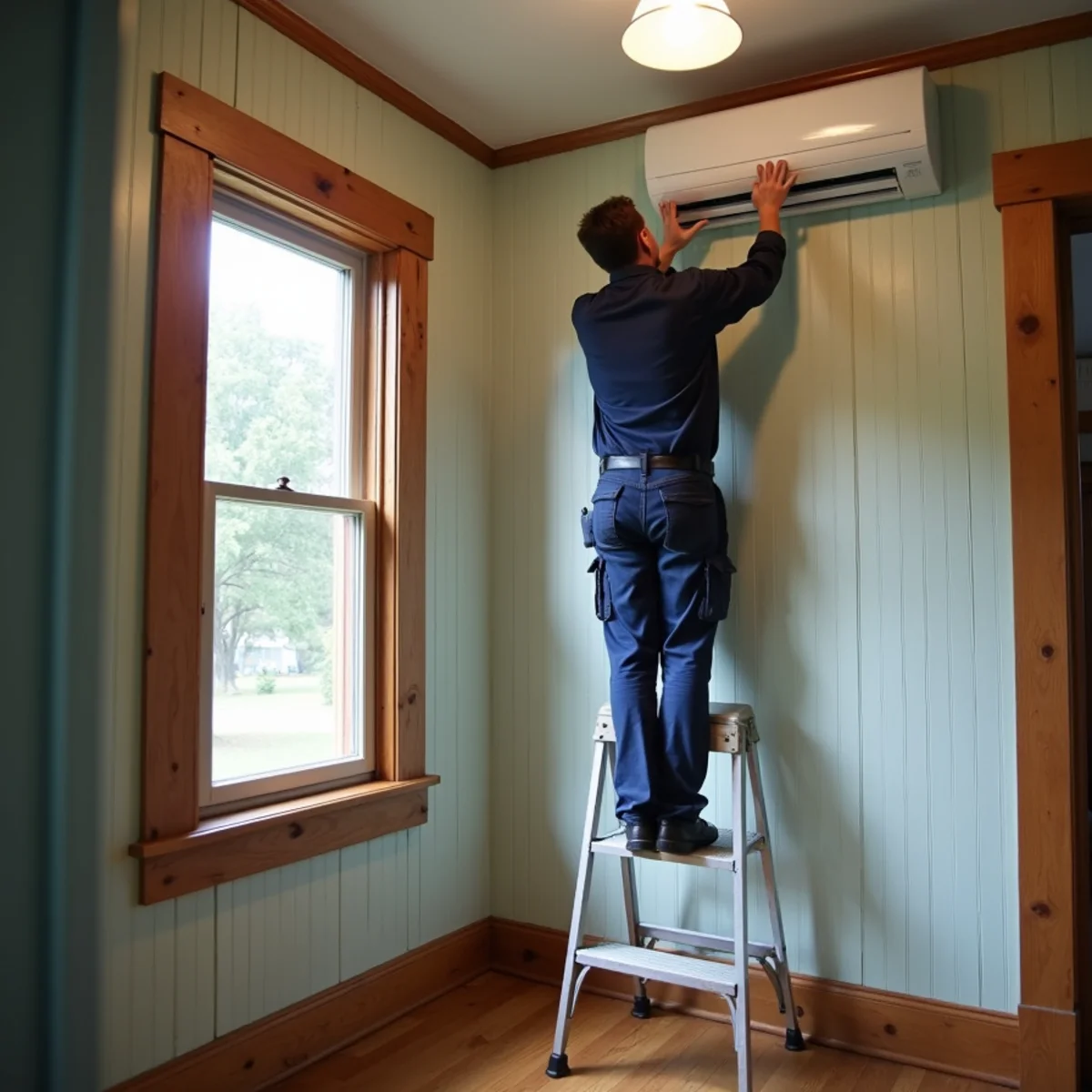
- Are there rooms or additions that would do better on a ductless mini-split than on the central system?
- What does a Manual J load calculation say the house actually needs?
The Section 25C federal credit for heat pumps and high-efficiency furnaces ended for equipment installed after 2025, so don't build it into your budget. Utility rebates and financing are the more realistic levers now.
Our Honest Take for Piedmont Homes
For most all-electric homes and rural properties without gas, a properly sized heat pump is the practical choice. For homes that already have gas and a healthy furnace, keeping the furnace or going dual-fuel usually makes more sense than ripping it out. And if your furnace is failing but the rest of the system is sound, furnace repair may buy you years before you need to decide at all.
We'll give you written options for each path, explain the tradeoffs in plain language, and let you pick. There's no upsell built into the conversation.
Heat pumps and gas furnaces: what homeowners get wrong
Myth: Heat pumps stop working once it drops below freezing.
Fact: There is still usable heat in outdoor air well below 32 degrees, and a heat pump keeps moving it indoors. What falls off is capacity and efficiency, which is why backup heat exists. Modern variable-speed models keep producing meaningful heat into the teens, and a Piedmont winter spends most of its hours well above that range.
Myth: Switching the thermostat to emergency heat warms the house faster.
Fact: Emergency heat simply locks out the heat pump and runs the electric strips or furnace alone. The house warms at about the same pace, but on strip heat you pay far more for it. Emergency mode is meant for a heat pump that has actually failed, not for a chilly morning or a quicker recovery after a setback.
Myth: A bigger furnace or heat pump will keep the house more comfortable.
Fact: Oversized equipment reaches the thermostat setting quickly and shuts off, so it short-cycles. That wears parts, leaves hot and cold spots, and in cooling season quits before pulling humidity out of the air. A load calculation sized to the actual house usually produces longer, steadier cycles and more even temperatures than stepping up a size.
Myth: Going with a heat pump means you have to tear out the gas furnace.
Fact: A furnace in good condition can stay as the indoor unit and backup heat source while a heat pump replaces the outdoor AC. That dual-fuel pairing needs a compatible coil and a thermostat that handles both, but the furnace cabinet, blower and venting remain. It is often the least disruptive way to add heat pump efficiency.
Choosing a heat source south of Burlington
The fuel question looks different a few miles out of town. Around the Village of Alamance along NC 62, most country lots have no natural gas line, so the real choice is heat pump with electric strips or heat pump with a propane furnace. For those homes, we weigh how reliably the propane truck reaches a long driveway during an ice storm against the cost of running strips on the few very cold nights.
Down along the Haw, homes around Saxapahaw's mill lofts and wooded lots push the decision in other directions:
- Loft spaces inside masonry mill buildings rarely have room for a furnace and ductwork, so a multi-zone heat pump in mini-split form is usually the only practical path.
- Fog and damp cold near the river mean heat pumps defrost more often, so we favor models with demand defrost that only runs when the coil actually needs it.
- Farmhouses switching off oil need their wall cavities sealed before sizing, or either fuel ends up oversized.
Both areas are close enough for same-day visits on most calls, about 10 and 25 minutes from our Burlington base.
From the field: the details that tip the decision
On paper this is a fuel comparison. In practice, the deciding factors are usually buried in the house itself, and Jesse checks them before recommending either path.
- The indoor coil. A heat pump needs an indoor coil built for heat pump duty with the right metering device. Pairing a new heat pump with an old furnace coil is a common shortcut that leads to poor heating and a charge that is never quite right.
- Register placement. Heat pump air in the 90s feels cool when it blows directly on a sofa or bed. Moving or redirecting a few supply registers often fixes the "heat pumps feel drafty" complaint without changing equipment.
- The gas meter's monthly charge. If a furnace is the only gas appliance, switching to a heat pump can drop the fixed gas service fee entirely. If the water heater, range or fireplace also run on gas, that fee stays and dual fuel becomes more attractive.
- Lifespan. A heat pump runs in both seasons, so it tends to wear out sooner than a furnace that only works in winter. Budget for that when comparing long-term cost.
The honest downside of dual fuel is complexity: two heat sources, a thermostat that has to be configured correctly, and a furnace that still needs combustion safety checks every fall. For homes where the furnace is healthy, that trade is usually worth it. For homes with no gas, it rarely is.
Talk Through Your Options
Every house has its own answer, and we're happy to find yours. Start with a visit from our heat pump services team, and Jesse will look at your ductwork, electrical, fuel supply, and comfort goals before recommending anything. Financing options are available if a replacement makes sense.
Frequently asked questions
Do heat pumps work well enough in North Carolina winters?
Yes, for most Piedmont homes. Our winters are mild enough that a correctly sized heat pump handles the majority of the season efficiently. On the handful of very cold nights, backup heat strips or a dual-fuel furnace fill the gap. Newer variable-speed models hold their heating capacity at low temperatures far better than older single-stage units.
Is it cheaper to heat with gas or a heat pump in North Carolina?
It depends on your gas and electric rates and on the equipment. In mild weather a heat pump usually wins. In very cold stretches, natural gas often costs less per unit of heat than electric backup strips. That's why dual-fuel systems are popular in homes that already have gas service.
Can I add a heat pump to my existing gas furnace?
Usually, yes. If your furnace is in good condition and your AC condenser is the part that's failing, replacing the condenser with a heat pump and adding a compatible thermostat creates a dual-fuel system. We'll confirm the furnace and coil are compatible and that the ductwork can handle the airflow first.
Local service for this topic

Written by Littlejohn HVAC Solutions, LLC. Owner Jesse Littlejohn is a licensed HVAC professional serving Burlington and Alamance County. About us