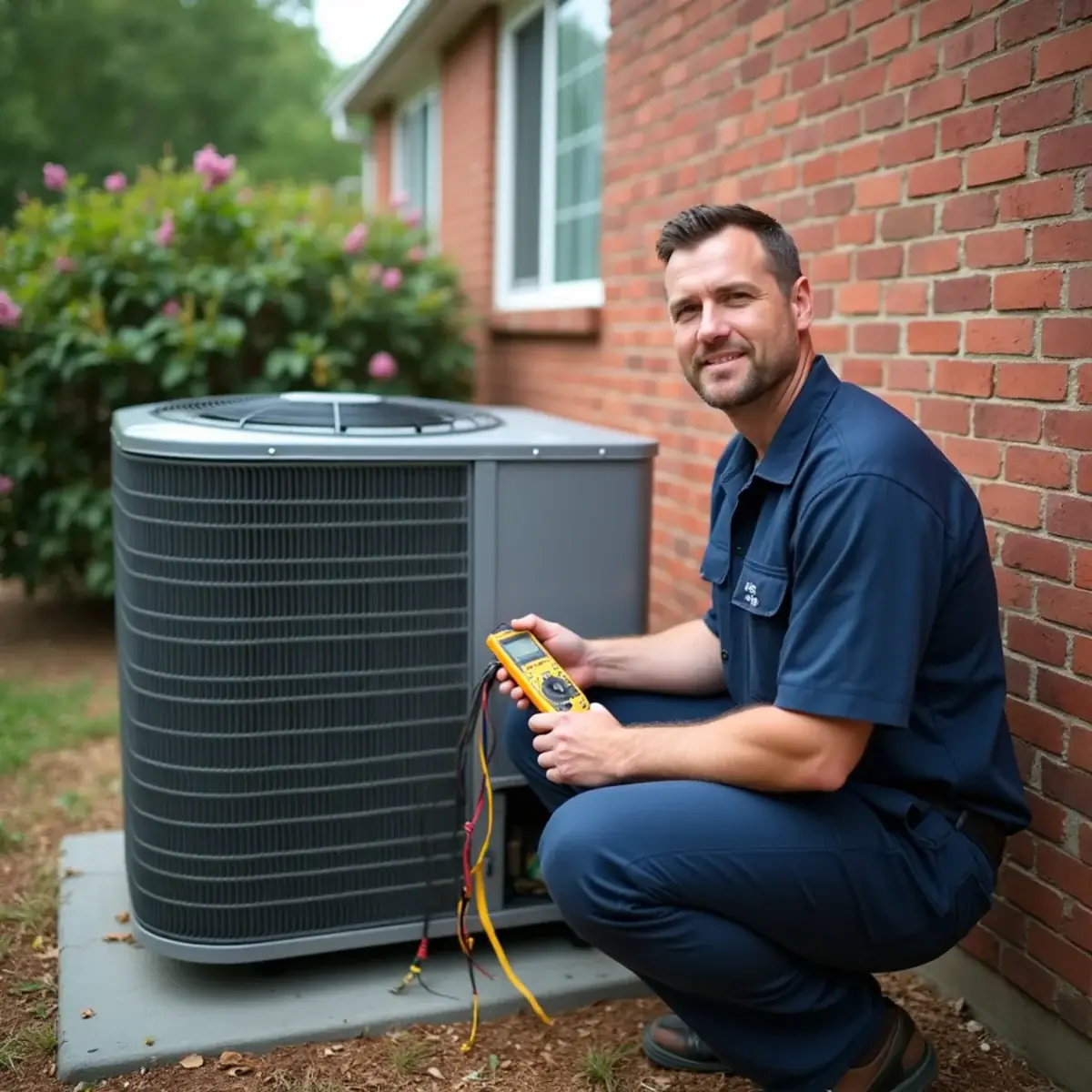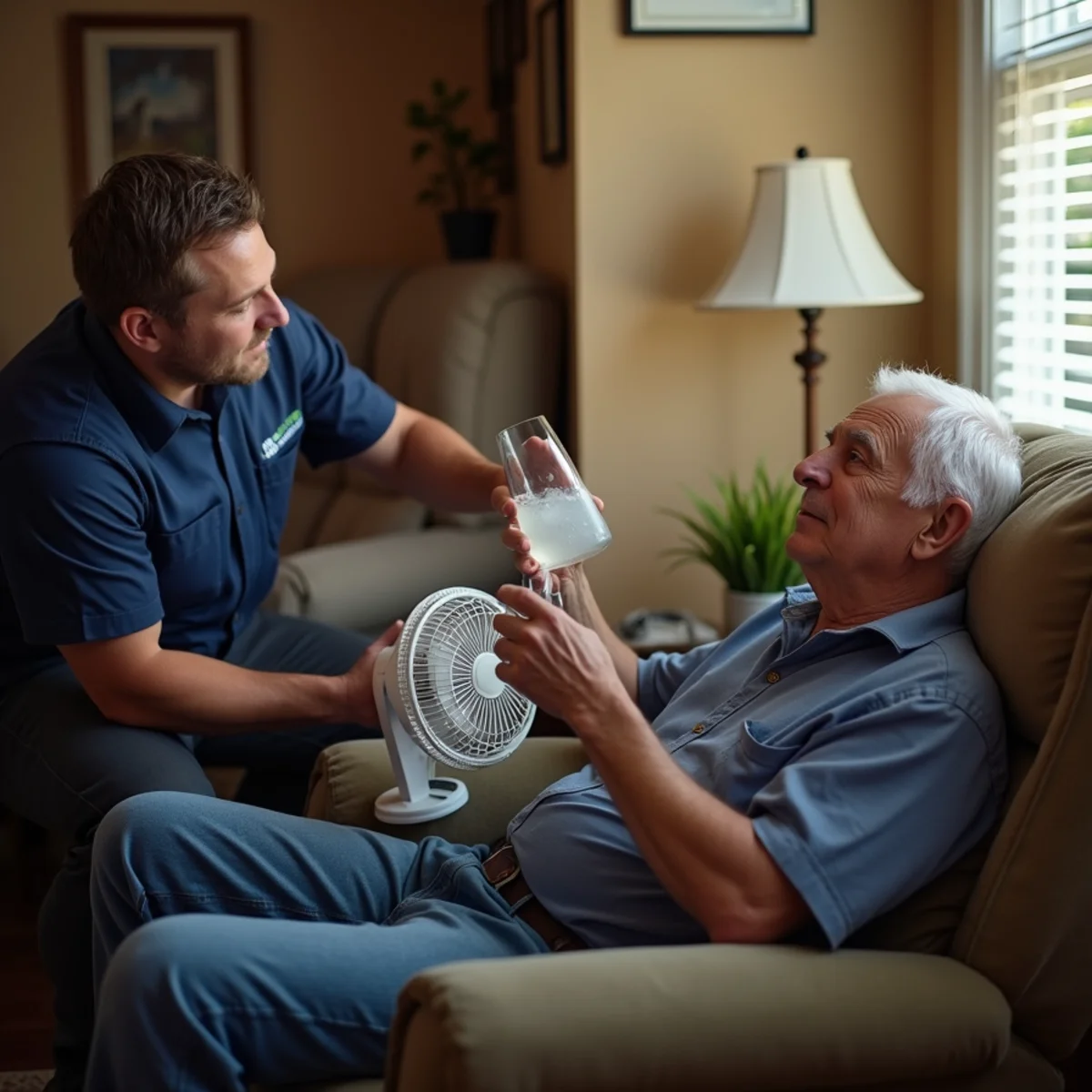
Emergency AC repair in Burlington, NC is for air conditioning failures that can't wait, especially when the indoor temperature is climbing and someone at home handles heat poorly. We are open 24/7 for cooling emergencies, rank calls by risk to the people inside, and test the system before replacing anything. You see a written price before the repair starts.
Signs Your AC Problem Can't Wait Until Next Week
Some cooling problems are an inconvenience. These are the ones that justify a same-day call, especially when someone in the house handles heat poorly.
Indoor temperature past 85 and still climbing
At mid-80s in the afternoon, the house keeps gaining heat until after sunset, and discomfort becomes a health concern.
Someone at higher risk is home
Adults over 65, babies, people on diuretics or heart medication, and anyone with COPD lose the ability to shed heat quickly. Tell us when you call so we can plan the route around it.
Burning smell or loud buzzing outside
A hot electrical odor or a harsh buzz from the condenser usually means a shorted capacitor, a welded contactor, or a motor that has locked up. Shut the AC off at the thermostat and leave it off.
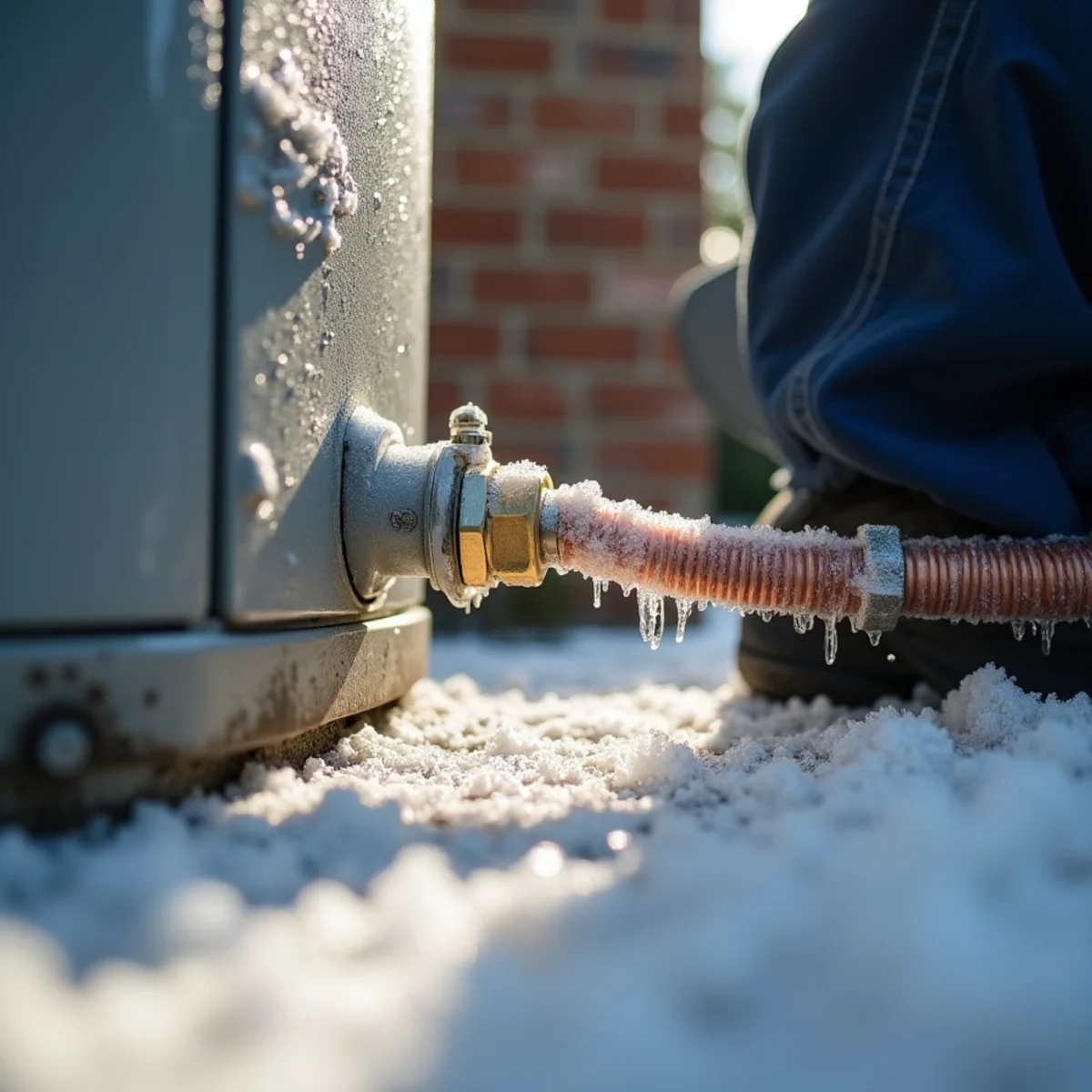
Ice on the copper line or indoor coil
Frost on the larger insulated line points to low charge or starved airflow. Running the system frozen can send liquid refrigerant back to the compressor and turn a modest repair into a major one.
The breaker trips every time cooling starts
Repeated trips mean the unit is drawing far more current than it should. Each reset heats wiring and compressor windings further.
How We Triage an AC Emergency
Not every broken air conditioner is an emergency, and we won't treat it like one just to fill a slot. A dead AC on a mild June day can wait for a regular appointment. The same failure in late July, with a grandparent in the next room, is a different call.
So the first few minutes on the phone are about people, not equipment. Jesse will ask what the indoor thermometer reads, who is in the home, and whether anyone has a condition that makes heat dangerous. Those answers set the order of the route. Households with seniors in their 70s and 80s, infants, or medical needs move to the front of the line.
Why a house heats up faster than you expect
Alamance County summers stack highs in the 90s on top of dew points that often hover near 70. When cooling stops at midday, nothing is pulling moisture out of the air, so the house gets hotter and stickier at the same time. Sweat stops evaporating well in that air, which is exactly how heat exhaustion catches people who don't feel all that hot.
What to Do While You Wait
A few simple steps buy time and protect the equipment. None of them involve opening panels or touching refrigerant lines.
- Switch the thermostat to OFF. If the outdoor unit is running without cooling or the coil is icing, continued operation can damage the compressor.
- Move everyone to the coolest room. Basements and north-facing rooms stay noticeably cooler. Close blinds on the sunny side of the house.
- Hydrate early with water or electrolyte drinks. Cool damp cloths on the neck and wrists work better than most people expect.
- Bring pets inside to a tile or concrete floor with fresh water. Short-nosed dog breeds and older cats struggle first.
- Text us a photo of the thermostat, the outdoor unit, and any blinking light on the furnace or air handler. It often tells us which part to have in hand.
The Failures Behind Most Hot-Weather Calls
Peak-heat breakdowns cluster around parts that were already weak before a week of 95-degree afternoons finished them off.
| What you notice | Likely cause | Fixed on the first visit? |
|---|---|---|
| Outdoor unit hums, fan won't spin | Failed run capacitor or seized condenser fan motor | Usually. Common capacitors and motors ride on the truck |
| Nothing runs outside at all | Burned contactor, pulled disconnect, or blown fuse | Usually |
| Warm air and a frosted suction line | Low refrigerant charge or badly restricted airflow | Diagnosed same day; a leak repair may need a return trip |
| Water on the floor, then shutdown | Clogged condensate drain tripping a float switch | Yes |
| Breaker trips at startup | Grounded compressor or failing start components | Depends on the compressor test |
An honest diagnosis matters most under pressure. Among our reviews is a homeowner who had been told by three other technicians that she needed a whole new unit. Jesse found the actual fault, repaired it, and had her cooling again. That's the standard on every emergency: fix what's broken and explain it in plain language.
Emergency Cooling Help Around Burlington
We run emergency AC calls all over the county, from older homes near downtown Graham to the manufactured homes and single-story houses around Green Level and damp riverside crawlspaces in Haw River. Same-day service on most calls is the goal wherever you are, and we call ahead when we're on the way.
Problems that don't need a rush visit belong on our standard AC repair service, and clogged drains and dirty coils are exactly what a spring AC tune-up is designed to catch.
Why air conditioners quit on the hottest days, and how we protect the compressor
Design conditions and the afternoon it all catches up
Home cooling systems in the Piedmont are sized to hold the mid-70s indoors on a design day in the low 90s. When a heat wave climbs past that, even a healthy system runs without a break and the indoor temperature creeps up by late afternoon. That alone isn't a failure. What turns it into one is a component already near its limit, running hour after hour with no off cycle to cool down.
The outdoor unit has to dump heat into air that's already hot. As outdoor temperatures reach the upper 90s, head pressure and compressor current rise with them, and every weak point feels it: a capacitor a few microfarads low, a dry condenser fan bearing, a coil half-blocked by cottonwood fluff.
What protects the compressor, and what defeats it
- Internal overload: a thermal protector inside the compressor opens when the windings overheat. A compressor that hums, cuts out and stays off for an hour is often cooling down on its overload, not dead.
- Start components: the run capacitor, and on some units a hard-start kit, help the compressor start against pressure. A weak one forces it to pull locked-rotor current, several times its normal draw, on every start.
- Restart delay: most thermostats and boards wait a few minutes before restarting so pressures can equalize. Flipping the thermostat off and on repeatedly works against that protection.
- Indoor airflow: without it, the evaporator coil freezes and liquid refrigerant can reach a compressor that is built to pump vapor, not liquid.
Measuring before we let it restart
Before a compressor starts again, we check winding resistance and test for a short to ground. Once it runs, we compare its amp draw to the rated load amps on the nameplate and watch head pressure with the condenser fan turning. When the compressor proves healthy and a capacitor or fan motor was the real culprit, replacing that smaller part saves the most expensive component in the system.
What's included in our emergency AC repair
An urgent cooling call covers more than the part that quit. These are the steps built into every emergency AC visit.
Compressor protection check
Before restarting, we confirm the compressor isn't locked or grounded and that the start components are healthy. Restarting a struggling compressor over and over is how a capacitor problem becomes a replacement.
Frozen coil thaw plan
If the indoor coil is iced, we set the system to thaw safely, protect ceilings and floors from the meltwater, then find the reason it froze so it doesn't ice up again tonight.
Surge and storm inspection
Summer thunderstorms knock out a lot of air conditioners. We check fuses at the disconnect, the contactor coil and the control board for surge damage, and look for lightning-scorched wiring.
Cooling restored and measured
Once running, we measure supply and return air temperatures and confirm the outdoor fan and compressor are drawing normal current, so you know the house will keep cooling after we leave.
Plan for the rest of the heat wave
You get advice on thermostat settings, blinds and filter changes to lighten the load on the system until temperatures break, plus a note on any follow-up repair that can wait for a regular appointment.
How an Emergency AC Call Works
- 1
A quick risk check on the phone
We ask about indoor temperature, who is home, and any medical concerns, then give you a realistic arrival window instead of a vague promise.
- 2
Photo triage
A picture of the data plate lets us match capacitors, contactors, and motors before we leave.
- 3
Call-ahead arrival
You get a call when we're headed your way, so nobody has to sit by the door in a hot house wondering.
- 4
Test before replacing
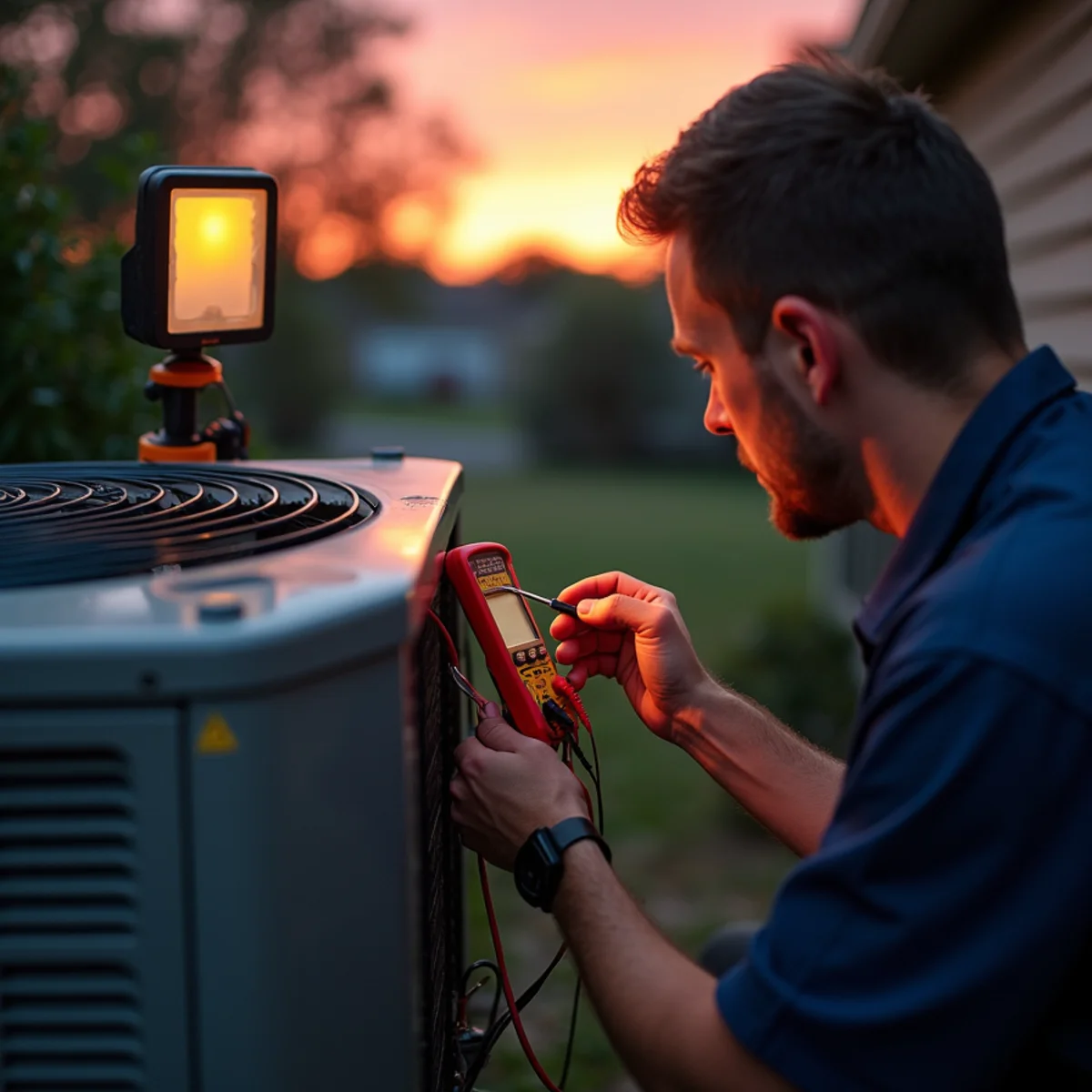
Capacitor microfarad readings, amp draw on the compressor and fan motor, line voltage, and refrigerant pressures confirm the failure. Guessing wastes your money.
- 5
Written options, then the repair
You see the price before any work starts. Once the fix is in, we stay until supply air is measurably colder than return air.
What you can check on a dead AC vs. what needs a pro
A few quick observations help us and protect the compressor, while anything behind a panel or on the refrigerant side stays with a technician.
Safe for you to check
- Stand near the outdoor unit and listen. Humming with no fan, rapid clicking or total silence each point to different parts, so describe it when you call.
- Glance at the fan through the top grille. If the blade sits still while the unit hums, turn the thermostat off right away to spare the compressor.
- Close blinds on west- and south-facing windows by early afternoon and skip the oven and dryer, which lowers the heat load while the system recovers.
- Note whether the trouble began right after a storm, a power blip or a long run on a scorching day, because timing narrows down the failed part.
Leave to a licensed tech
- Testing the compressor windingsResistance and ground-fault checks happen at 240-volt terminals, and a misread can condemn a healthy compressor or restart a shorted one.
- Replacing capacitors or hard-start kitsCapacitors store a charge that can injure you even with the power off, and a wrong microfarad or voltage rating overheats the motor it serves.
- Recovering or adding refrigerantFederal law requires EPA Section 608 certification to open a refrigerant circuit, and charging correctly in hot weather depends on superheat or subcooling readings.
- Replacing a condenser fan motorThe new motor must match horsepower, speed, rotation and shaft size, and a wrong blade height or rotation starves the coil and drives up head pressure.
- Thawing and diagnosing a frozen coilThawing takes hours and meltwater can overflow the pan, and sorting out whether low charge, a dead blower or a dirty coil caused it takes gauges and meters.
What Affects the Cost of an Emergency AC Repair
Two no-cooling calls can have completely different causes, so we don't publish flat prices. These are what move the number.
- When the call happens
- Evening, weekend, and holiday visits cost more to staff than a weekday afternoon. We'll tell you up front if an after-hours rate applies.
- Which part failed
- A capacitor or contactor is a small repair. A condenser fan motor sits in the middle, and a compressor sits at the top.
- Refrigerant type and amount
- Older systems built around R-22 are expensive to recharge because that refrigerant is no longer produced. Newer systems use R-410A or R-454B.
- Leak search time
- If the charge is low, finding the leak with an electronic detector or nitrogen pressure test takes time, and it's the only way to avoid refilling a system that will just leak out again.
- Equipment access
- An air handler in a cramped attic on a 95-degree afternoon takes longer to service than one in a hall closet.
You'll get a written quote before any work begins, with no pressure to replace a system that can be repaired. Financing options are available if the fix turns into a bigger project.
Red flags when an AC is quoted in a heat wave
Peak-heat breakdowns come with pressure to decide fast, and a few patterns deserve a second look before you sign.
Compressor condemned without a winding test
A compressor that won't start is often held back by a weak capacitor, a burned contactor or a tripped internal overload. Ask whether resistance and ground readings were taken. Without them, a quote for a new compressor or an entire system rests on a guess.
Refrigerant added to a frozen coil
Ice on the coil sends many technicians straight for the refrigerant tank. Airflow problems like a failed blower or a clogged filter freeze coils just as often, and overcharging in hot weather raises head pressure. Charge should be judged only after the coil thaws and airflow is confirmed.
A hard-start kit sold as a cure-all
Hard-start kits have a place on older compressors that struggle at startup. Installed on every call, though, they can mask a compressor that's failing and buy weeks rather than years. Ask why the compressor needs help starting and what the amp readings showed.
A universal fan motor set up wrong
Universal condenser fan motors are handy, but rotation, speed and blade position have to match the original. A blade sitting too low in the shroud or a slower motor moves less air, and the compressor pays for it on the next 95-degree afternoon.
No readings once the air turns cold
Cold air at the vents isn't the finish line. If the technician packs up without measuring temperature split, amp draw and pressures under load, a second weak part can fail tomorrow afternoon. Ask what the numbers were before the truck pulls away.
Why choose Littlejohn HVAC Solutions for emergency AC repair
Seniors helped in summer heat
Our reviews include seniors in their 70s and 80s who needed cooling back fast during summer heat. Those calls move to the front of the route, and we check in on how everyone is feeling.
Cool again in minutes, not days
One reviewer was cooling again within 20 minutes. Most hot-weather failures come down to common parts we carry on the truck, so the first visit is usually the only one needed.
Nights and Sundays
We are open 24/7 for cooling emergencies, and reviewers mention Jesse showing up on a Sunday. An AC that quits at 9 p.m. doesn't have to mean a sleepless night.
Honest when it counts
Emergency pressure is when bad advice happens. We give you the real cause and a written price, with no push toward replacing a system that can be repaired.
Emergency AC near you
Our emergency cooling calls start in Burlington and reach across the surrounding area. Student rentals and family homes in Elon spike every July, and so do calls from Gibsonville and the newer subdivisions in Whitsett. Along the Haw River, homes in Swepsonville and Saxapahaw deal with muggy riverside air that makes a dead AC feel worse fast. We call ahead so you aren't waiting by the door.
We provide emergency AC repair throughout Burlington and Alamance County, including: