No heat repair in Burlington, NC means finding out why a furnace, heat pump or backup heat stopped warming the house, then fixing that exact fault the same visit whenever the part is on the truck. We're open 24/7 for heating emergencies, Jesse answers the call himself, and you get a written price before anything is replaced.
What a No-Heat Problem Usually Looks Like
The symptom you see narrows down the cause quickly. Note which of these matches your house before you call.
Blower runs, but the air is cold
On a gas furnace, this usually means the burners never lit or shut off seconds after lighting. On a heat pump, it can mean the outdoor unit stopped and the backup strips aren't picking up the load.
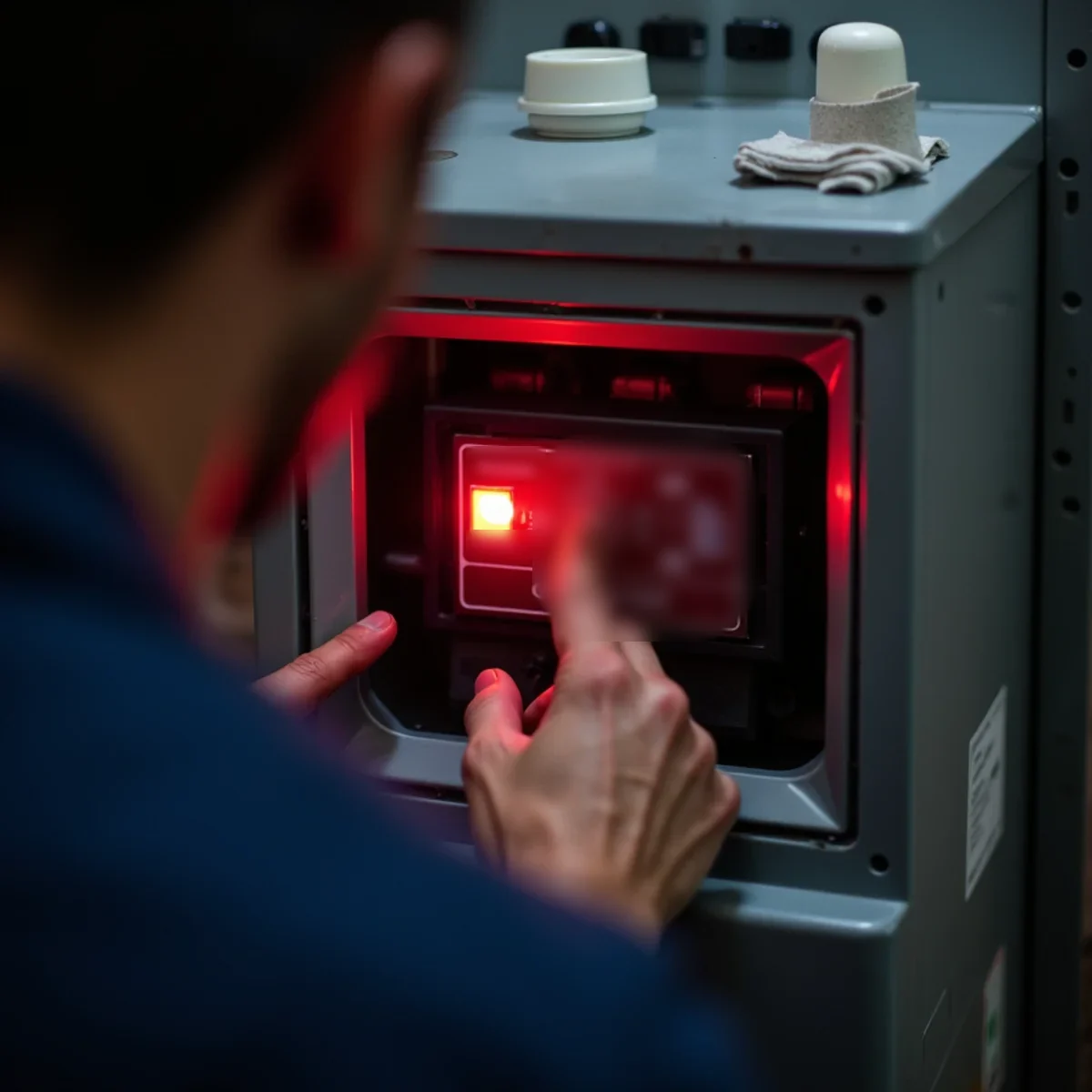
Furnace tries three times, then goes quiet
That's a lockout. The control board attempted ignition, didn't prove flame, and is now waiting before it tries again. A blinking LED on the board tells us why.
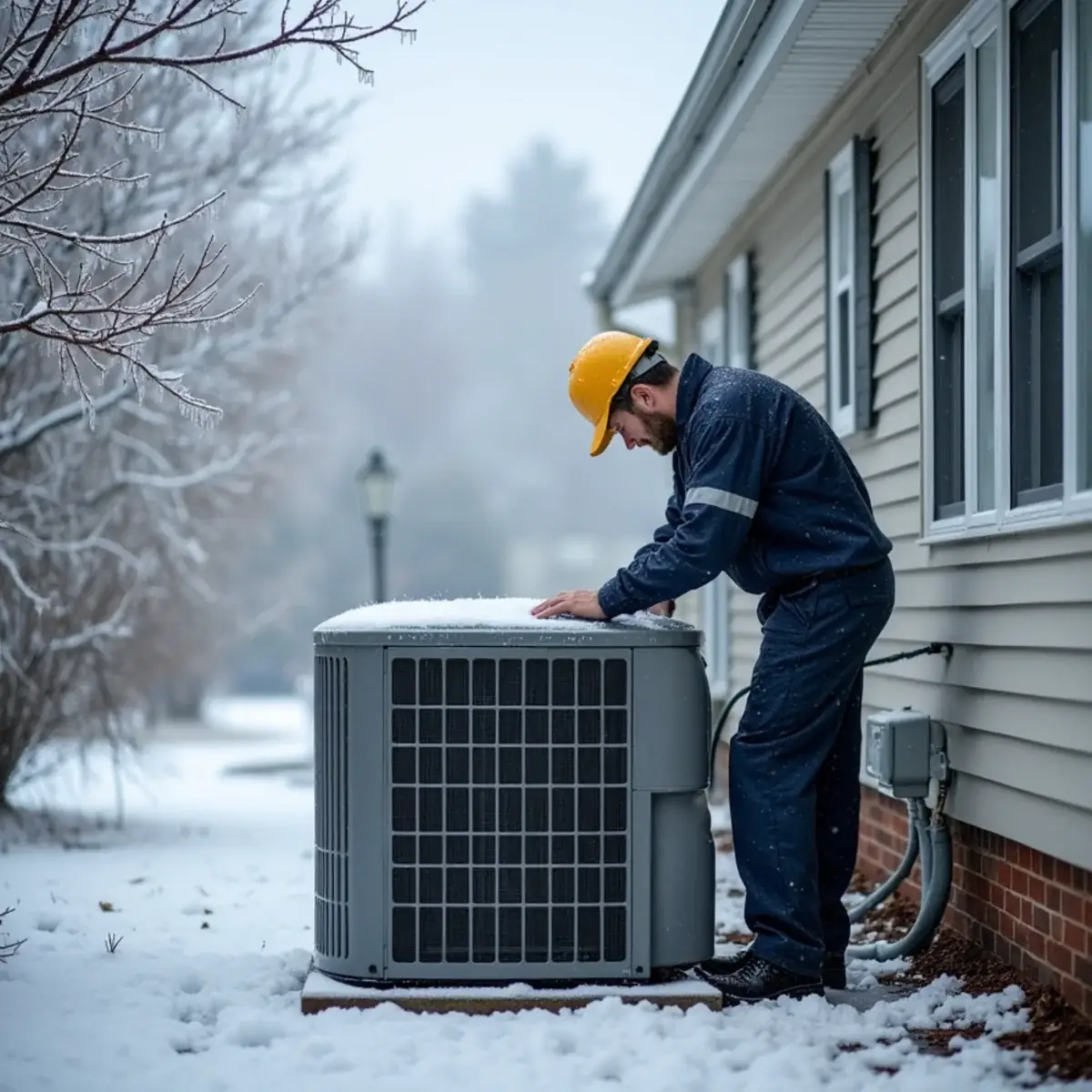
Outdoor unit encased in ice
A light frost that clears every hour or so is normal defrost behavior. A solid block of ice that keeps growing means defrost has failed or freezing rain has sealed the coil.
Thermostat stuck on AUX or EM HEAT
Aux heat coming on during very cold mornings is normal. Aux running all day in mild weather points to a heat pump that has quietly stopped doing its job.
Heat never came back after a power outage
Surges when the grid returns can damage control boards and transformers.
Rotten-egg smell near the furnace
Leave the house now and call the gas utility or 911 from outside. Don't flip switches or try to relight anything. We come after the gas company clears the home.
Why Heat Fails When Burlington Needs It Most
Burlington sees few single-digit nights, which is part of the problem. Heating equipment coasts through most of the winter, then an Arctic front or ice storm asks it to run nonstop for days. Weak ignitors, tired motors, and dirty sensors give out under that load, often on the same morning county-wide.
Heat pumps, aux heat, and emergency heat
A heat pump pulls heat from outdoor air, and its output drops as the temperature falls. In the 20s, most systems lean on electric resistance strips in the air handler to keep up. That's what AUX on your thermostat means, and seeing it on a cold morning is normal.
EM HEAT is different. It shuts the outdoor unit off entirely and heats the house on strips alone. Use it when the outdoor unit is iced solid, grinding, or tripping its breaker. It keeps the house warm at a higher power cost while you wait for service, and it protects the compressor from further damage.
Freezing rain is the other heat pump problem specific to our winters. Ice can seal the top fan grille and fill the coil faster than defrost can clear it. Knock loose hanging ice from overhead gutters or branches, but never chip at the coil itself. The aluminum fins and copper tubing puncture easily.
Gas furnace lockouts
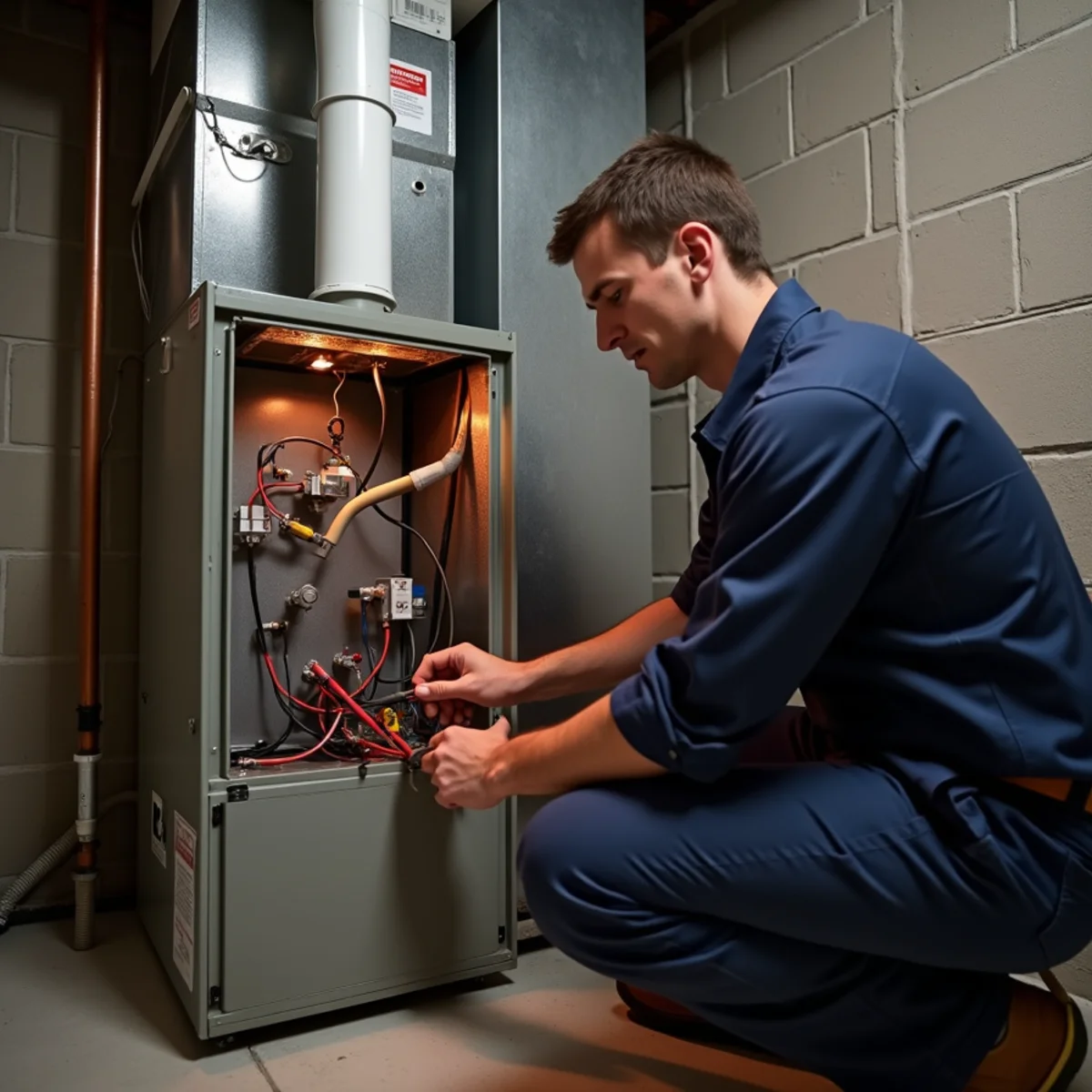
Modern gas furnaces run a strict safety sequence: inducer motor, pressure switch, ignitor, gas valve, flame sensor. If any step fails to prove itself, the board tries again, usually up to three times, and then locks out. Typical culprits are a flame sensor coated with oxide, a cracked hot-surface ignitor, or a pressure switch that can't close because the PVC vent is blocked. On high-efficiency furnaces, snow drifts and ice on the sidewall vent terminal cause that last one more often than people realize.
Cutting power once to reset a lockout is fine. Cycling it over and over clears the fault code we need to read. For the full rundown on ignition problems, see our gas furnace repair service.
When the power is back but the heat isn't
After a long outage, many heat pump manufacturers recommend running on emergency heat for several hours so the crankcase heater can warm the compressor oil. Check the strip-heat breakers, too. A blank thermostat with power restored often means a surge took out the transformer or a board fuse.
Safe Temporary Heat While You Wait
Carbon monoxide poisonings spike after every major ice storm in North Carolina, and nearly all of them come from improvised heat. Here is how common options stack up.
| Heat source | Safe to use? | What to know |
|---|---|---|
| Electric space heater | Yes, with care | Plug into the wall, not a power strip, with three feet of clearance. |
| Wood fireplace or insert | Yes, if the chimney is maintained | Open the damper fully and keep a working CO alarm nearby. |
| Gas oven or stovetop | No | Not designed to heat a room. It produces carbon monoxide and moisture with no venting. |
| Grill, camp stove, or charcoal | Never indoors | That includes garages and screened porches. |
| Portable generator | Outdoors only | Keep it at least 20 feet from doors, windows, and vents, pointed away from the house. |
No-Heat Calls Across the Area
We handle no-heat calls throughout Alamance County, including newer subdivisions in Mebane where heat pump thermostats are sometimes set up wrong for aux heat, and rural homes near Saxapahaw.
If the outdoor unit is the problem, our heat pump repair team handles defrost boards, reversing valves, and sensors. For a failure that hits at 2 a.m. and involves more than heat, start with emergency HVAC repair.
Inside the heating sequence: ignition, defrost and backup heat staging
Hot surface ignitors and the pressure switch
Most furnaces around here light with a hot surface ignitor, a small ceramic element that glows well past 1,800 degrees before the gas valve opens. Silicon carbide ignitors are brittle and creep up in resistance as they age. Silicon nitride types last longer but aren't a direct swap on every board. We measure resistance in ohms against the manufacturer's range, because an ignitor that still glows can be too weak to light gas reliably on a cold morning.
Before the ignitor even heats, the inducer has to pull enough draft through the vent to close a pressure switch rated in inches of water column. A switch that won't close usually means a blocked vent, water trapped in the inducer housing or a plugged condensate trap, not a bad switch.
How a heat pump decides to defrost
Older heat pumps defrost on a timer, every 30, 60 or 90 minutes of run time, as long as a coil sensor reads cold enough. Newer demand-defrost controls compare coil temperature to outdoor air and defrost only when frost is really building. If that sensor drifts or slips off its tube, defrost never starts and the coil ices solid even though every other part works. Piedmont mornings that hover near freezing with damp air build frost faster than a dry, colder climate does.
How backup heat is staged
Electric strips are sized in kilowatts and wired in stages. A 10 kW kit is commonly two 5 kW elements, each drawing about 20 amps at 240 volts. The thermostat brings on the first stage when the heat pump falls behind and the second if the room keeps dropping. Some systems also have an outdoor thermostat that locks the strips out above a set temperature, near the heat pump's balance point. A mis-set lockout or a dead sequencer is how a house sits at 62 degrees while the heat pump runs flat out.
What's included in our no heat repair
A no-heat visit is more than swapping the first part that looks tired. These are the checks and deliverables you can expect on every call.
Low-voltage control check
We confirm the thermostat is actually calling for heat, then test the 24-volt transformer, the board fuse and the wiring at the air handler. A blown 3-amp fuse or a shorted thermostat wire is a cheap fix that looks like a dead furnace.
Flame sensor microamp reading
Instead of guessing, we measure the flame signal in microamps before and after cleaning the sensor rod. A weak reading on a clean rod points to a grounding or board problem, which saves you a return visit.
Heat strip and sequencer amp draw
On heat pumps we clamp each electric strip to prove it's heating, check the sequencers or relays that bring them on in stages, and test the limit switches. One dead strip explains a house that never climbs above 64.
Combustion and carbon monoxide check
Before a repaired gas furnace goes back into service, we check draft at the flue, look over the burners and heat exchanger, and sample the air near the appliance for carbon monoxide.
Vent terminal and intake clearance
High-efficiency furnaces breathe through two PVC pipes. We clear ice, leaves or wasp nests from the terminals and confirm the pipes slope back toward the furnace so condensate can't pool and trip the pressure switch.
Written findings you can keep
You get the failed part, the reading that proved it, the repair price and any worn parts we noticed but didn't touch. That record helps the next time a cold front arrives or you're weighing a replacement.
How We Restore Heat
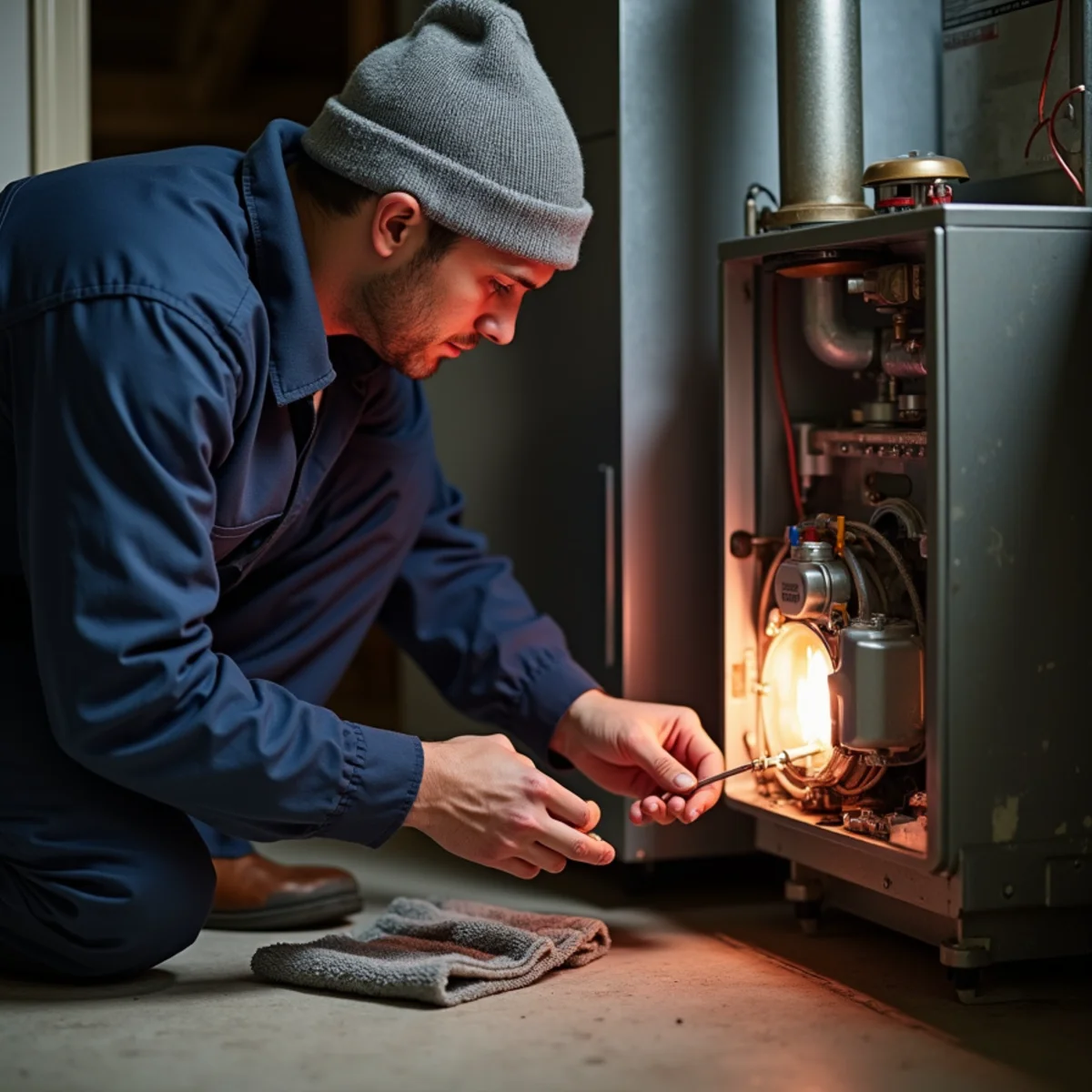
- 1
Safety first
Before anything else, we check for gas odor, confirm your CO alarm status, and make sure any temporary heat in use is safe.
- 2
Read the fault history
Furnace boards store blink codes and many heat pump controls log errors. We read them before touching anything, because they point straight at the failed step.
- 3
Walk the sequence
We test each stage in order, from the thermostat call through ignition and flame proof, or on a heat pump, the contactor, defrost control, and strips.
- 4
Price it, then fix it
You approve a written price before we replace anything. Common parts like ignitors, flame sensors, and capacitors are usually on hand.
- 5
Confirm a full heating cycle
We measure temperature rise across the furnace or air handler and watch at least one full cycle, including a defrost on heat pumps when conditions allow.
What you can check when the heat is out vs. what needs a pro
A handful of checks can restore heat or sharpen the diagnosis without opening anything that carries gas or high voltage.
Safe for you to check
- Confirm the thermostat is on HEAT with the setpoint a few degrees above room temperature, and swap the batteries if the display looks faint.
- Walk outside and look at both furnace PVC pipes on the wall or roof, clearing snow, leaves or ice from the openings by hand.
- Watch the heat pump for 15 minutes. Frost melting off in a burst of steam means defrost is working, which is useful to tell us.
- Feel the air at a register a few minutes after the blower starts, and note whether it's cold, lukewarm, or warm but weak.
- Clear leaves and drifted snow from around the base of the heat pump so melted frost can drain away instead of refreezing on the coil.
Leave to a licensed tech
- Replacing a hot surface ignitorThe part is fragile, must match the board's voltage and ignitor type, and sits right beside the burners where a mistake can cause delayed ignition.
- Testing gas valve and manifold pressureSetting gas pressure takes a manometer and falls under the North Carolina fuel gas code, and wrong pressure causes soot, overheating or carbon monoxide.
- Diagnosing defrost boards and coil sensorsForcing a defrost test means working in the outdoor unit's high-voltage compartment, and reversing valve problems can require EPA Section 608 refrigerant work.
- Servicing heat strips and sequencersElectric heat kits carry heavy current at 240 volts, and a replacement limit or sequencer must match the kit's ratings to prevent overheating.
- Clearing a blocked inducer or trapDraining the trap and switch tubing carelessly can spill acidic condensate onto the control board or leave a vent leak that lets flue gas indoors.
What Shapes the Price of a No-Heat Repair
Most no-heat repairs are modest. These variables decide which ones aren't.
- Furnace vs. heat pump
- Gas furnace ignition parts are generally less involved than heat pump defrost controls or reversing valves, which may require refrigerant work.
- Storm demand and timing
- Calls during an active ice storm or overnight cost more to run than a weekday visit. We'll tell you if an after-hours rate applies before we come.
- Part availability
- Universal ignitors and sensors are cheap and common. Brand-specific control boards and variable-speed blower motors cost more and sometimes need to be ordered.
- Venting and combustion issues
- A blocked or improperly pitched PVC vent may need rerouting, which adds labor beyond a simple part swap.
- Age of the equipment
- On an older furnace with a suspect heat exchanger, we'll give you the repair price and the replacement picture side by side so you can decide.
Every no-heat repair starts with a written quote you approve. We won't push a new system when a repair makes sense, and financing options are available if replacement is the better call.
Red flags in no-heat diagnoses and repair quotes
Cold weather makes almost any quote sound reasonable, so these are the shortcuts worth questioning.
A new control board for an ignitor problem
Boards take the blame on plenty of no-heat calls because they run the whole sequence. But a board sending voltage to a cracked ignitor is working fine. Ask whether the ignitor was checked for resistance and the board's output was tested before a new board goes in.
Heat pump left running on emergency heat
Switching to emergency heat warms the house and ends the visit quickly. If the technician leaves without fixing the defrost control, sensor or outdoor unit, you're paying for strip-heat electricity until someone comes back. Ask what exactly is wrong with the heat pump itself.
Aux heat lockout disabled to fix comfort
Turning off an outdoor lockout lets the strips run whenever they like, which can make the house warmer and the power bill much higher. The real question is why the heat pump can't carry the load, whether that's low charge, failing defrost or poor airflow.
Pressure switch replaced without checking the vent
Pressure switches do fail, but far more often they're reporting something real: a sagging vent, water in the inducer or a plugged trap. A new switch on the same vent will trip again the next cold night. Ask what the manometer reading was.
Heat pump charge adjusted by guesswork
Checking charge in heating mode is less reliable than in summer, and many manufacturers call for weighing refrigerant in when it's cold outside. Adding refrigerant by feel on a freezing day can leave the system overcharged by the time cooling season arrives.
Why choose Littlejohn HVAC Solutions for no heat repair
Open around the clock in winter
Heat rarely quits at a convenient hour. We're open 24/7 for HVAC emergencies, so a furnace lockout at 5 a.m. on a January Saturday gets a real answer, not a voicemail box.
A diagnosis you can trust
Customers have told us other techs said they needed a whole new unit before Jesse found and fixed the actual fault. We repair what's broken and only talk replacement when the readings support it.
Priority for vulnerable households
When a senior, infant or someone with a medical condition is in a cold house, tell us on the call. We've helped older customers through extreme weather and move those homes up the route.
Clear communication, including ASL
Jesse calls ahead when he's on the way and explains the problem in plain terms. He's also proficient in ASL, which helps Deaf and hard-of-hearing customers get the full picture.
No Heat near you
Heating failures cluster during the same cold snap, so we route no-heat calls from Burlington outward by urgency. That includes brick ranches in Graham, older rentals around Elon when students leave thermostats low over break, gas-furnace homes in Gibsonville, newer heat pump subdivisions in Whitsett, and rural houses near Yanceyville where an overnight outage means a long, cold wait. Anywhere in our roughly 50-mile radius, we call ahead with a real arrival time.
We provide no heat repair throughout Burlington and Alamance County, including: