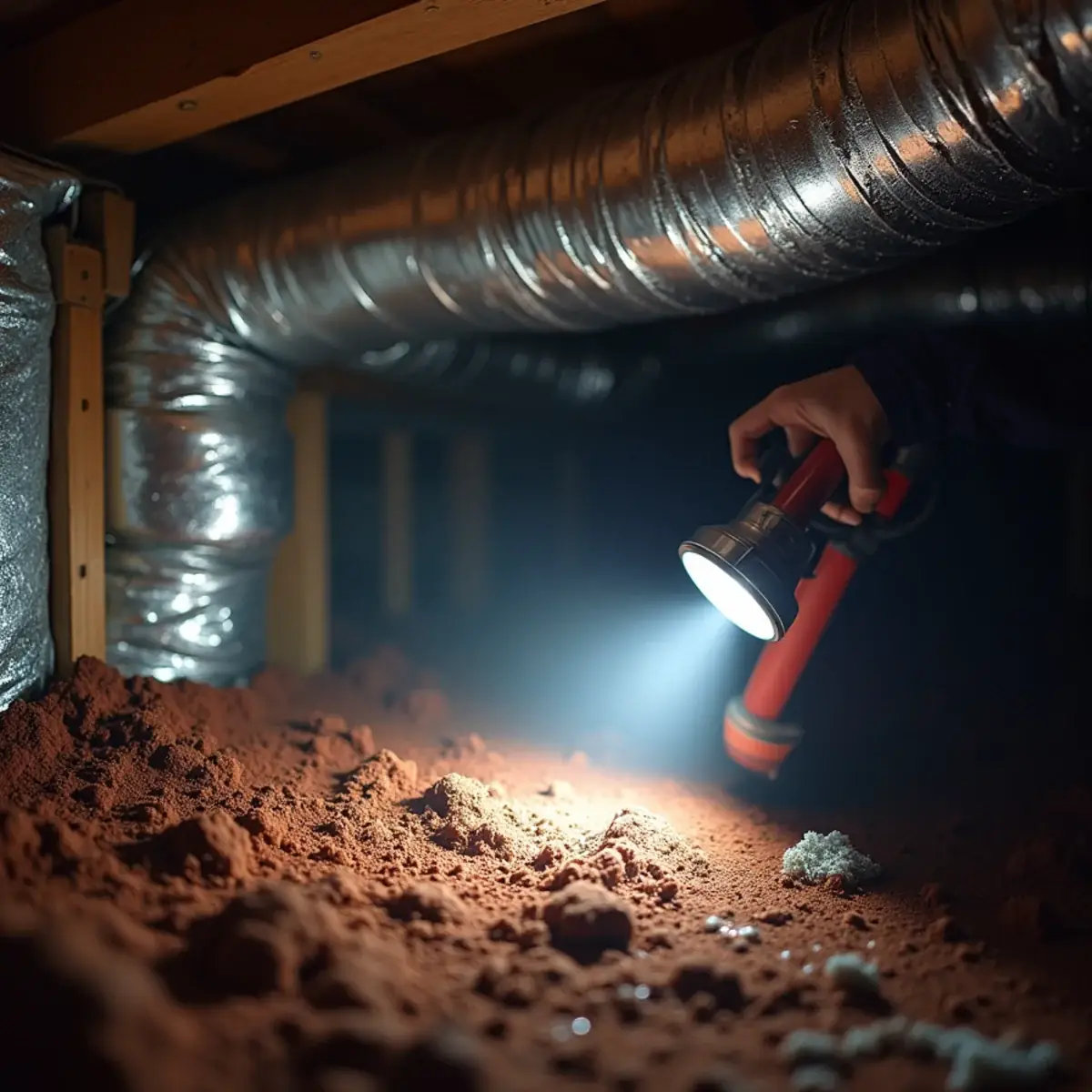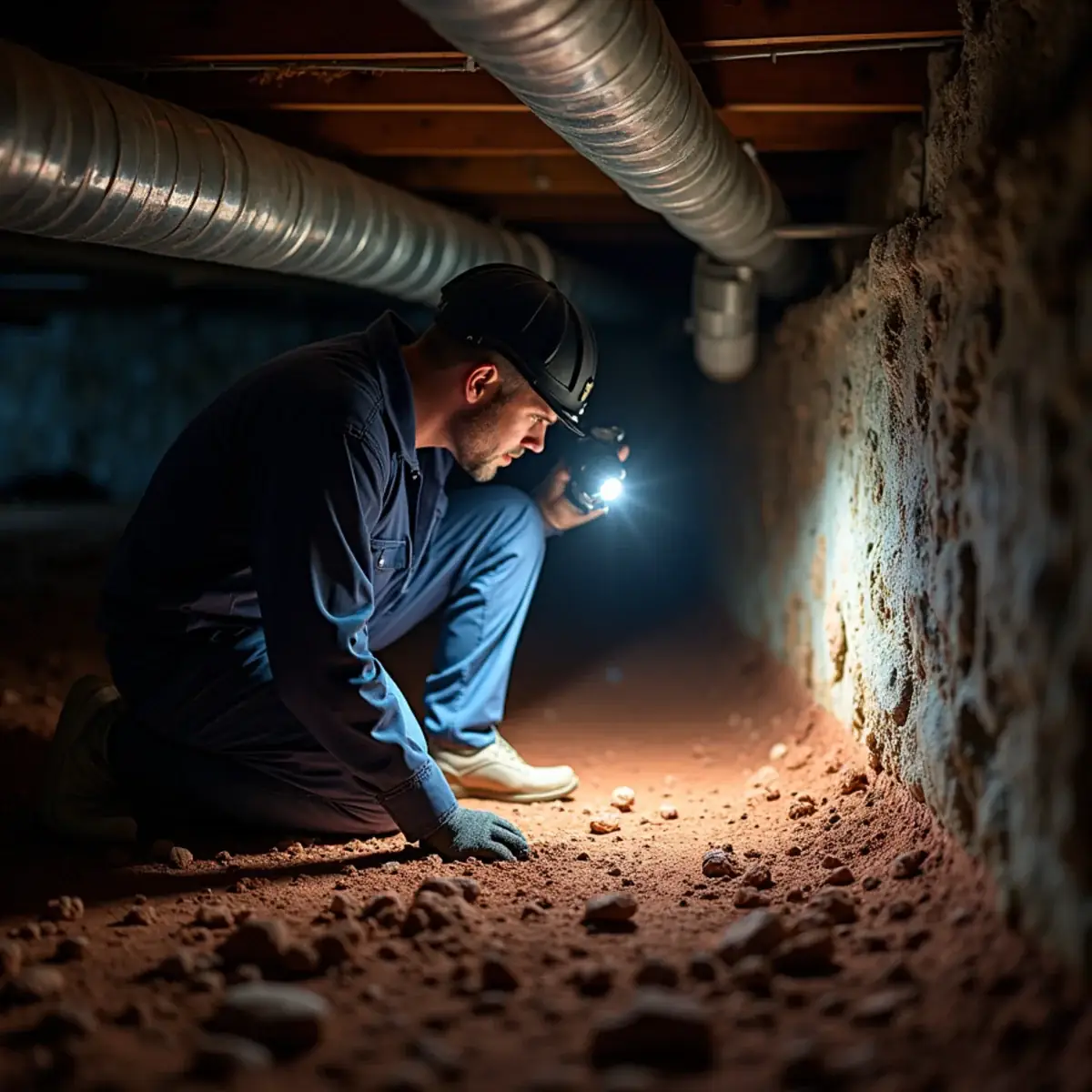
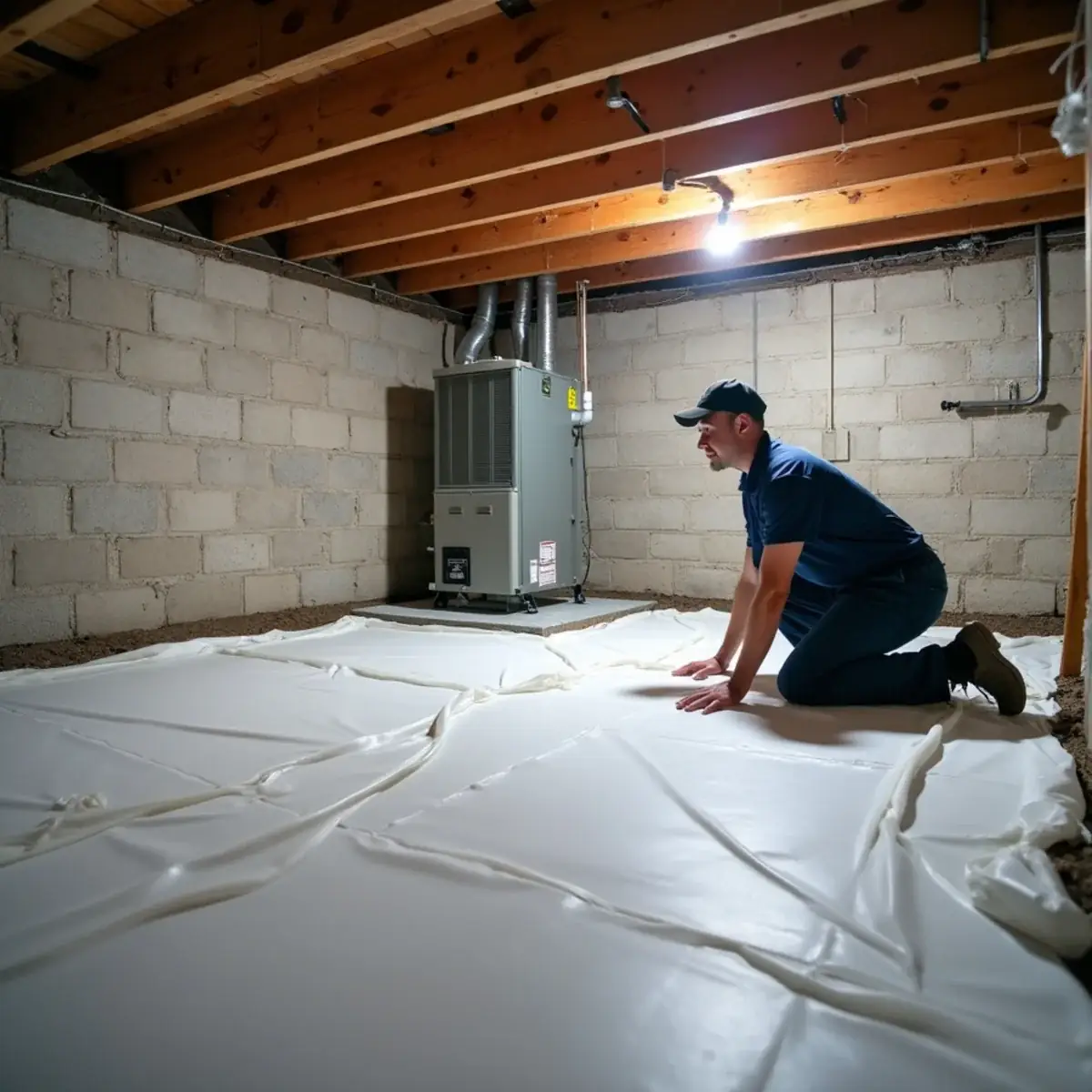
Vapor barrier installation in Burlington, NC seals the damp clay soil under your house behind a heavy liner so moisture stops rising into the crawlspace, your ductwork and your floors. Because Littlejohn HVAC Solutions is an HVAC company, we plan the barrier, the ducts and the humidity control together, and every estimate is free and in writing.
Signs Your Crawlspace Needs a Better Moisture Barrier
Most homeowners never look under the house until something smells or sags. These are the clues we see before the damage gets expensive.
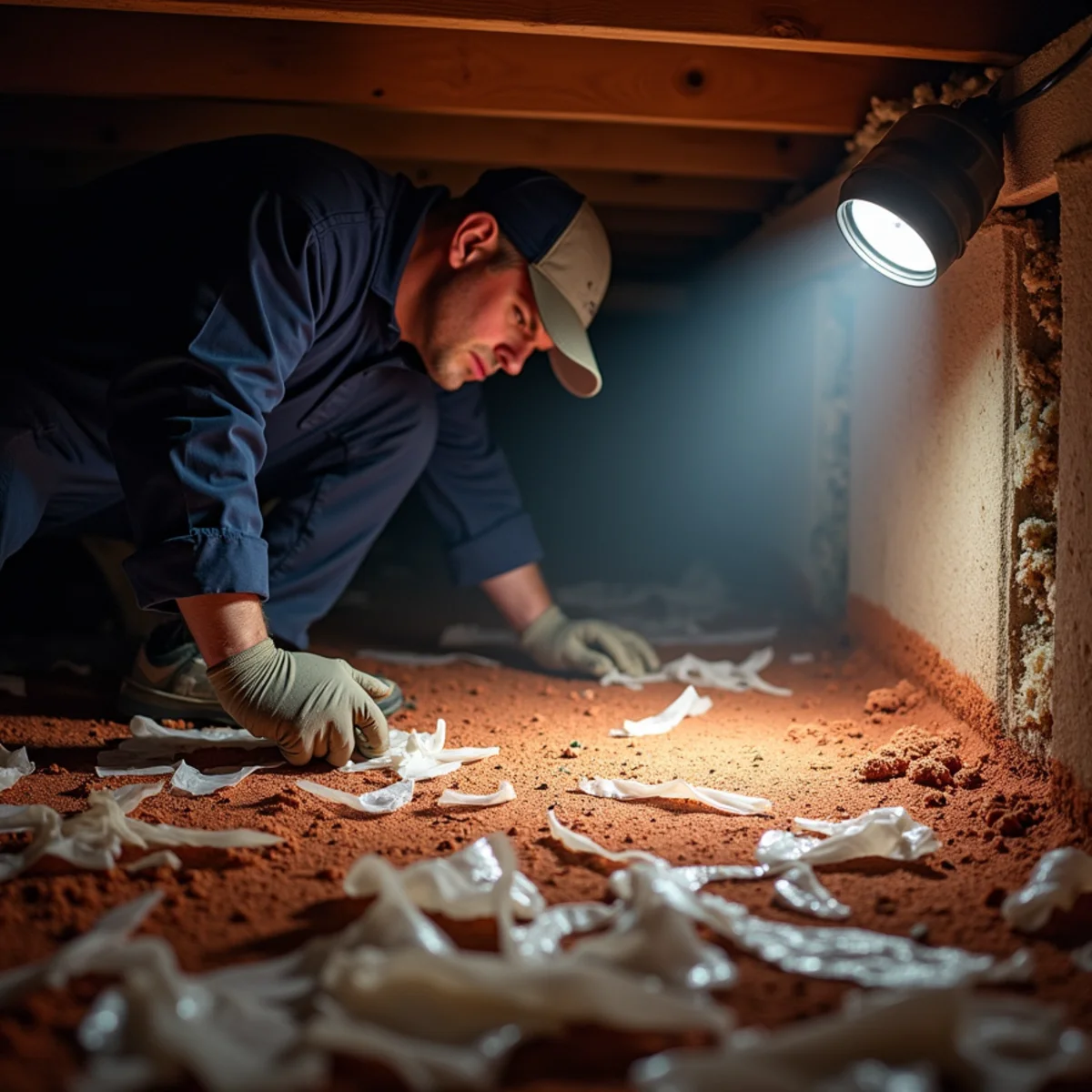
Bare dirt or torn plastic
Exposed clay, or a thin sheet of poly that's shredded and bunched in the corners, lets ground moisture evaporate straight into the space.
Water beading on duct jackets
Droplets on the outer wrap of supply ducts in July mean the air around them is saturated.
Insulation hanging from the joists
Fiberglass batts between floor joists soak up water, get heavy, and drop onto the ground.
Rust on the furnace or air handler cabinet
Equipment set on blocks in a damp crawlspace corrodes from the bottom up, including the burner area and drain pan.
White fuzz or dark staining on wood
Mold and mildew on joists and subfloor show the space has stayed wet for more than a season.
Rising summer power bills
Damp air under the floor adds latent load that your AC has to remove, so it runs longer for the same comfort.
Why Piedmont Crawlspaces Stay Wet
The red clay around Burlington holds water long after a storm passes. It drains slowly, so the soil under a house stays damp for weeks, and that moisture evaporates upward into the crawlspace whether it rains or not.
Then summer adds its share. Foundation vents were meant to dry the space out, but in a Carolina July they let in muggy outdoor air that hits a cooler surface underneath and condenses. A vented crawlspace in this climate often ends up wetter in August than in January.
Grading matters too. Many older lots in Alamance County slope toward the foundation, and gutters that dump at the corners push water right back under the house.
What a Wet Crawlspace Does to Your HVAC System
In most homes we service, the crawlspace is where the ductwork runs and often where the furnace or air handler sits. That makes moisture an HVAC problem, not just a structural one.
- Duct condensation. Cold supply runs drip steadily onto the soil below, which feeds the humidity that made them sweat in the first place.
- Collapsing duct insulation. Soaked wrap loses its R-value and its weight pulls flex duct into sags that choke airflow.
- Mold in the air stream. Leaky return ducts in a moldy crawlspace draw spores and musty air into every room.
- Corroded equipment. Heat exchangers, blower housings, and electrical connections all wear faster in constant dampness.
- Higher energy costs. Your AC spends run time pulling moisture out of air that leaked up from under the floor.
We regularly see this after the fact, when ducts are loose and falling down and need full replacement. Fixing the moisture source first is what keeps new ductwork installed by our team from ending up in the same shape.
Vapor Barrier vs. Full Encapsulation
A vapor barrier is a polyethylene ground cover laid over the soil. It stops most ground moisture, but the vents stay open, so humid outdoor air still gets in. Encapsulation goes further. The liner is heavier, it covers the walls and piers as well as the floor, and the crawlspace is sealed off from outside air so humidity can be controlled.
| Feature | Vapor barrier only | Full encapsulation |
|---|---|---|
| Liner | 6-mil polyethylene on the ground | 10- to 20-mil reinforced liner |
| Seams | Overlapped, sometimes taped | Overlapped and fully taped |
| Walls and piers | Usually left bare | Liner run up and fastened to walls and piers |
| Foundation vents | Left open | Sealed shut |
| Humidity control | None beyond the ground cover | Dehumidifier or small conditioned air supply |
| Best for | Dry, well-graded lots on a budget | Damp lots, ducts or equipment in the crawlspace |
Getting the details right
Standing water has to be solved before any liner goes down, whether that means regrading, fixing gutters, or adding a drain or sump. Sealing a crawlspace over a puddle just traps it.
We also leave a strip of bare foundation wall at the top of the liner so termite inspectors can see the block. North Carolina's residential code allows closed crawlspaces, but it expects vents to be sealed properly and the space to be dehumidified or supplied with conditioned air. We plan every job to meet those requirements and your local inspector's expectations.
Why an HVAC Company Handles This Work
Jesse approaches the crawlspace from the equipment's point of view. When the barrier, the ducts, and the humidity control are planned together, you don't end up with a dehumidifier fighting leaky returns, or a new liner torn up a month later to reroute a duct.
Encapsulation pairs naturally with duct replacement, since the crawlspace is already cleared and open. Once the space is sealed, a dehumidifier or supply register keeps it dry, and our indoor air quality and dehumidifier service covers that side of the job.
Homes on low, damp lots near the river see the most benefit. We do a lot of this work for homeowners in Haw River and for older crawlspace homes in Swepsonville, along with Burlington and the rest of our roughly 50-mile service area.
The science under your floor: vapor, dew point and wet wood
A crawlspace liner works because of a few physical rules. Knowing them makes it easier to judge any proposal, including ours.
Soil keeps giving off water vapor
Clay that looks dry on top still holds moisture a few inches down, and water vapor moves from that damp soil toward the drier air above it. A sealed polyethylene liner is classed as a vapor retarder with almost no permeability, so it blocks that upward flow. The weak points are the edges: unsealed seams, open gaps around piers and liner that stops short of the wall all let vapor bypass the sheet.
What wood moisture readings mean
We read framing with a pin-type moisture meter, which reports percent moisture content. Wood in a healthy, dry crawlspace generally reads in the low teens. As readings climb toward the high teens and past 20 percent, mold and decay fungi have what they need to grow. A single high spot usually traces to a plumbing drip or a sweating duct above it, while high readings everywhere point to the ground and the vents.
How a closed crawlspace gets dried
Once vents are sealed, something has to remove moisture. The two common methods are a dedicated crawlspace dehumidifier or a small amount of conditioned supply air from the HVAC system, which North Carolina's code ties to floor area and pairs with a path for air to return. Supply air works well when ducts are already under the floor. A dehumidifier suits homes on the wettest lots, where the extra drying capacity matters.
What's included in our vapor barrier and encapsulation work
The liner is the visible part. These are the details that decide whether a crawlspace actually stays dry for years.
Before-and-after photo set
You get dated photos of the ground, framing, ducts and equipment before we start and again when we finish, which is useful for resale, home inspections and your own peace of mind.
Wood moisture baseline
We take moisture-meter readings on sill plates, joists and subfloor at several points, so you have a starting number and can see the framing dry out over the following months.
Mechanically fastened walls and piers
Liner on the foundation walls and piers is held with fasteners and sealant, not just tape. Tape alone lets go on damp block within a season and the liner slumps to the floor.
Rim joist, access door and penetration sealing
Plumbing and wiring holes, the crawlspace door and gaps at the band joist get sealed so humid outdoor air can't bypass the closed vents.
Dehumidifier drain routed properly
When a crawlspace dehumidifier is part of the plan, its condensate goes to daylight by gravity or to a pump, never onto the new liner where it would pool.
Duct and equipment check while we're under
With the space cleared, we inspect duct connections, insulation and equipment stands, and flag anything that should be repaired before it gets harder to reach.
Humidity monitor and final readings
We finish with a humidity reading and can leave a simple monitor in the crawlspace so you can confirm it's holding in a safe range through the first humid summer.
How a Crawlspace Encapsulation Job Works
- 1
Free crawlspace estimate
We go under the house, take humidity and wood moisture readings, and photograph the ducts, equipment, and ground cover so you can see what we see.
- 2
Fix water first
Any drainage, gutter, or plumbing leak issues are addressed or scheduled before the liner goes in.
- 3
Clean out and prep
Old plastic, fallen insulation, and debris come out. Damaged ducts are repaired or replaced while access is wide open.
- 4
Install and seal the liner
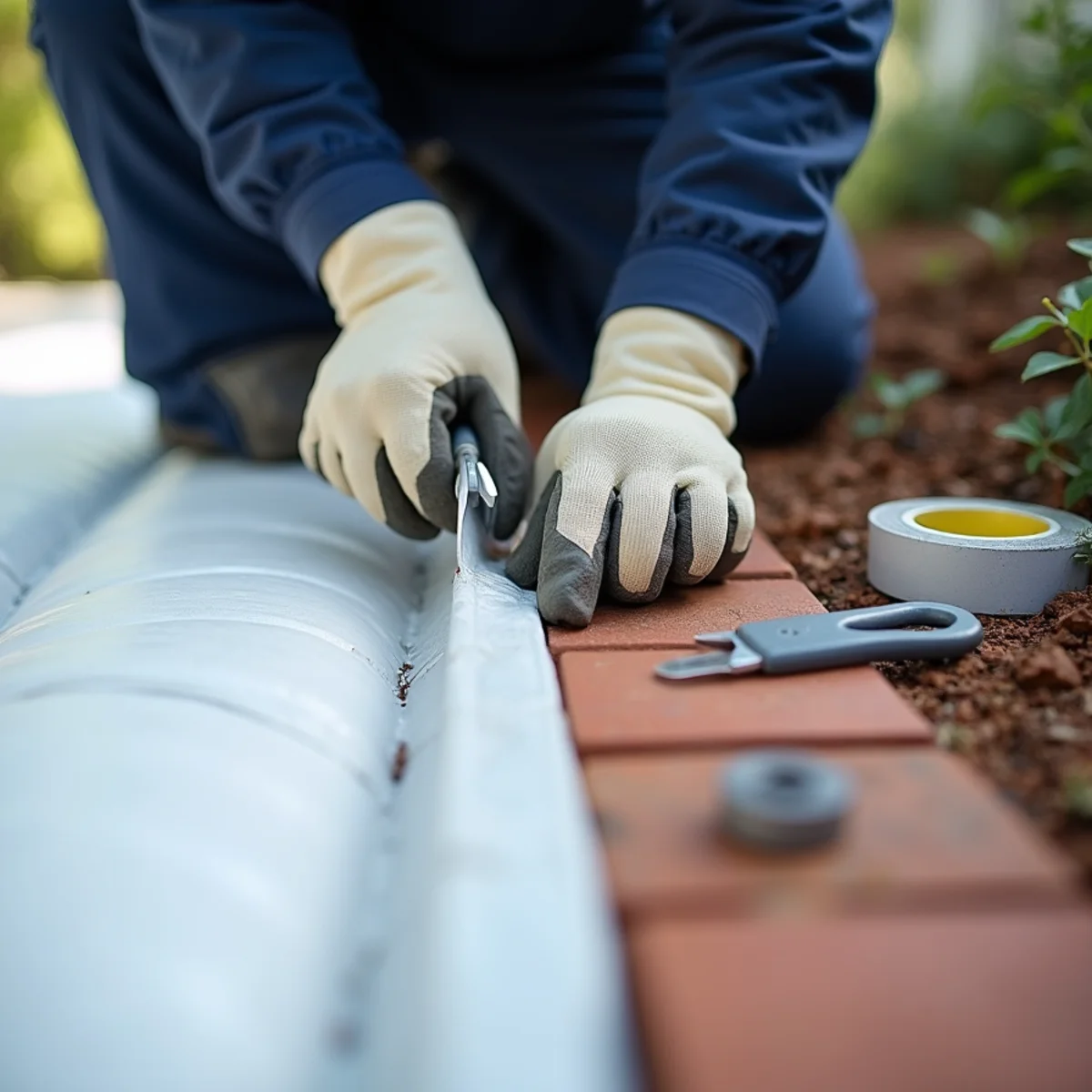
The liner is laid across the ground, taped at every seam, and run up the walls and piers. Vents and gaps are sealed.
- 5
Add humidity control and verify
We install the dehumidifier or conditioned supply, then check readings so you know the space is holding in a safe range.
Crawlspace checks you can make vs. jobs for a pro
You can learn a lot about your crawlspace from the yard and the access door, but most of the fixes underneath need tools and training.
Safe for you to check
- Confirm the dryer vent and bathroom exhaust fans terminate outdoors, not into the crawlspace, since both dump large amounts of moisture right where you don't want it.
- Add downspout extensions or splash blocks so roof water lands several feet from the foundation instead of soaking the soil next to it.
- Open the crawlspace access door and use a flashlight from outside to look for standing water, torn plastic or insulation on the ground.
- Make sure the access door closes tightly and its weatherstripping is intact, since a gap there lets humid air bypass sealed vents.
Leave to a licensed tech
- Sealing vents around gas appliancesClosing vents can starve a crawlspace furnace or water heater of combustion air, which risks incomplete burning and carbon monoxide. Combustion air has to be planned and verified.
- Removing wet or moldy insulationSoaked fiberglass and moldy debris release fibers and spores in a confined space. Safe removal takes respirators, protective clothing and careful bagging so it isn't tracked through the house.
- Installing a sump or drain systemSump pumps need a proper pit, a dedicated electrical supply and a discharge line that carries water away from the foundation and won't freeze or backflow.
- Dehumidifier or supply air setupSizing, electrical work, condensate routing and balancing supply air with a return path all affect whether the space stays dry without pulling conditioned air from the house.
What Affects the Cost of a Vapor Barrier or Encapsulation
Every crawlspace is different, so we price from what we measure on site rather than a flat rate.
- Square footage and pier count
- More ground area and more piers to wrap mean more liner and more labor.
- Liner thickness
- A basic 6-mil ground cover costs far less than a 20-mil reinforced liner built to handle foot traffic.
- Barrier or full encapsulation
- Sealing vents and adding humidity control adds materials and equipment beyond a ground cover alone.
- Drainage work
- Standing water that needs a sump, drain line, or regrading adds a separate step.
- Cleanout and duct condition
- Removing old insulation and replacing wet ductwork increases the scope of the job.
- Clearance and access
- Low crawlspaces with tight entry points slow every task down.
Estimates are free, and you'll get a written quote with each option priced before any work starts. Financing options are available for larger projects.
Red flags in crawlspace encapsulation estimates
Encapsulation quotes can vary widely for the same house. These are the warning signs that separate a real plan from a sales package.
Vents sealed with nothing drying the space
A liner and closed vents without a dehumidifier or conditioned air supply can trap moisture and make the crawlspace worse than before. Every closed crawlspace proposal should name its drying method and show where that equipment will drain.
No plan for gas appliances underneath
If a furnace or water heater in the crawlspace depends on vented air for combustion, sealing the space changes how it breathes. A quote that ignores those appliances skips a real safety question. Ask how combustion air will be handled.
Every add-on in every quote
Sumps, dehumidifiers, wall foam and drainage mats all have their place, but not every house needs all of them. If the proposal includes the full menu without moisture or wood readings to justify each item, ask which ones the measurements actually support.
Loose seams and bare piers
Thick liner means little if seams merely overlap without tape or the piers are left uncovered. Ask how seams are joined, how far the liner overlaps, and whether piers and walls are fastened, not just tucked.
Termite inspection gap covered over
Liner or foam run all the way to the sill hides the band of foundation that termite inspectors need to see. That can complicate inspections and home sales. A careful installer leaves the inspection strip visible and points it out.
Why choose Littlejohn HVAC Solutions for vapor barriers and crawlspace encapsulation
The HVAC side is handled in-house
Many crawlspace companies seal the space and leave the ducts to someone else. We do complete duct installation too, so sweating or falling ducts get fixed in the same project.
Estimates you can compare
Free, no-obligation written estimates price a basic ground cover and full encapsulation side by side, so you choose the level of protection your lot actually needs.
Clean jobs, finished on schedule
Customers mention work finished sooner than quoted and a full cleanup afterward, including a system and duct replacement where the old ducts were loose and falling down.
Financing for bigger crawlspaces
Encapsulation with drainage and dehumidification is a real investment. Financing is available, and we also accept cash, Venmo, Cash App and Zelle.
Vapor Barriers & Encapsulation near you
Damp crawlspaces are common across the Burlington area, but the cause varies from lot to lot. We see heavy clay and poor grading under older homes in Graham, slab-to-crawl transitions in newer Mebane neighborhoods, shaded wooded lots near Elon, and low-lying rural homes around Green Level, Ossipee and Alamance. Anywhere in our roughly 50-mile radius, the free estimate starts under the house.
We provide vapor barriers & crawlspace encapsulation throughout Burlington and Alamance County, including: