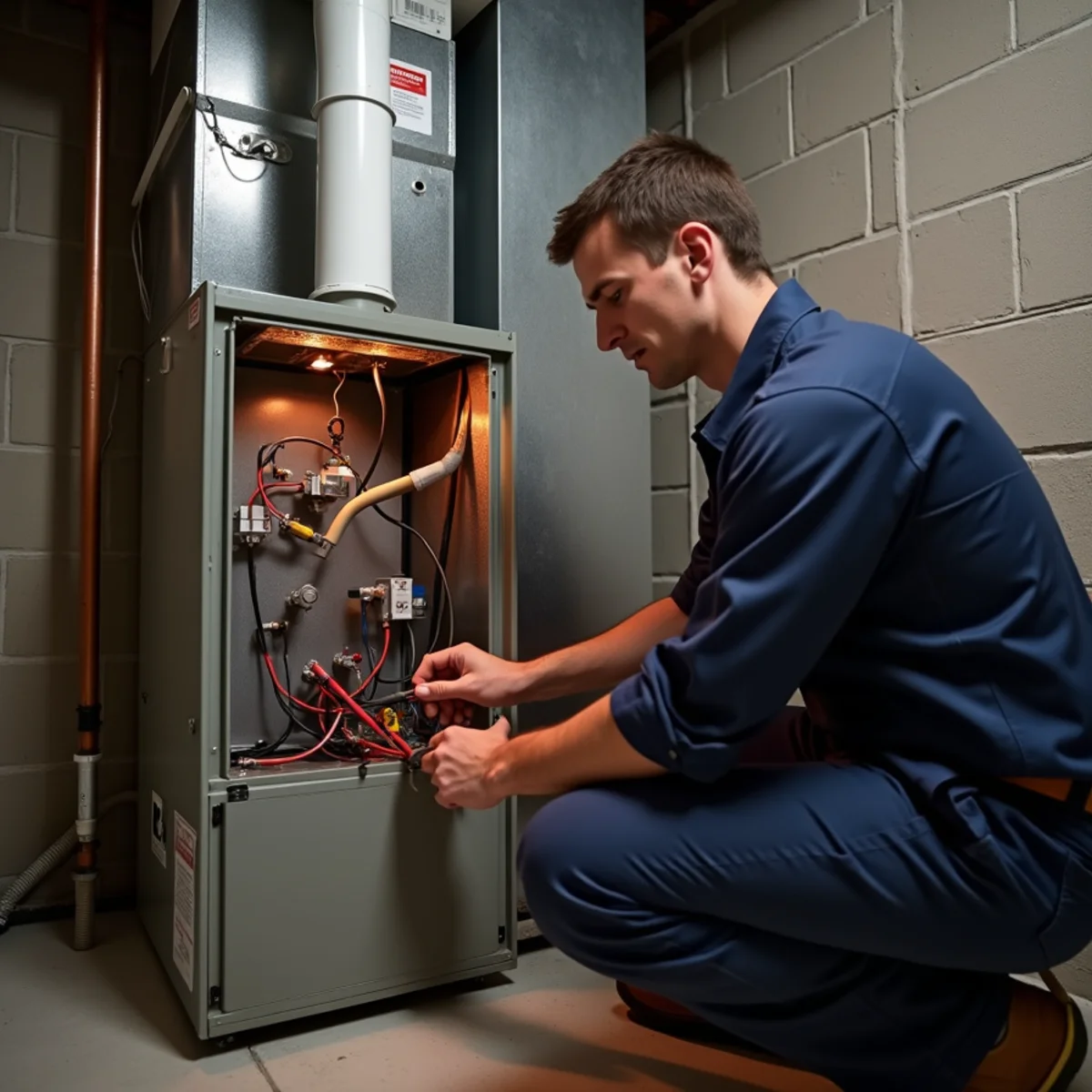
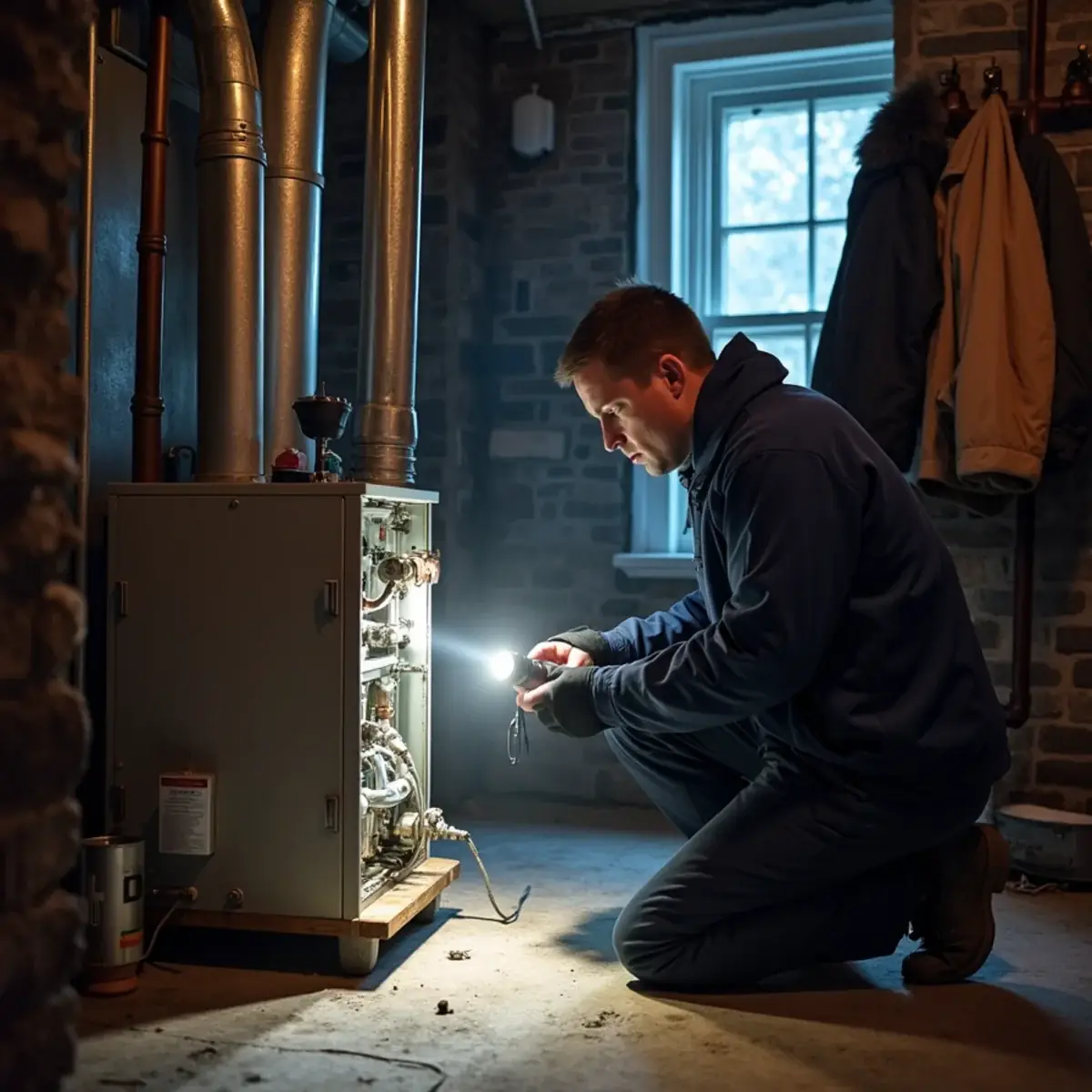
Furnace repair in Burlington, NC covers gas, propane and electric furnaces that won't light, won't stay lit or aren't heating the house evenly. Jesse checks combustion safety first, finds the failed step in the ignition sequence and gives you a written price before fixing it. We are open 24/7 for heating emergencies and offer same-day service on most calls.
Signs Your Furnace Needs Attention
A furnace that's struggling usually tells you before it quits completely. Pay attention to these, especially early in the heating season.
Blower runs but the air is cold
The fan is working but the burners aren't lighting or aren't staying lit. Ignitors, flame sensors and pressure switches are the usual suspects.
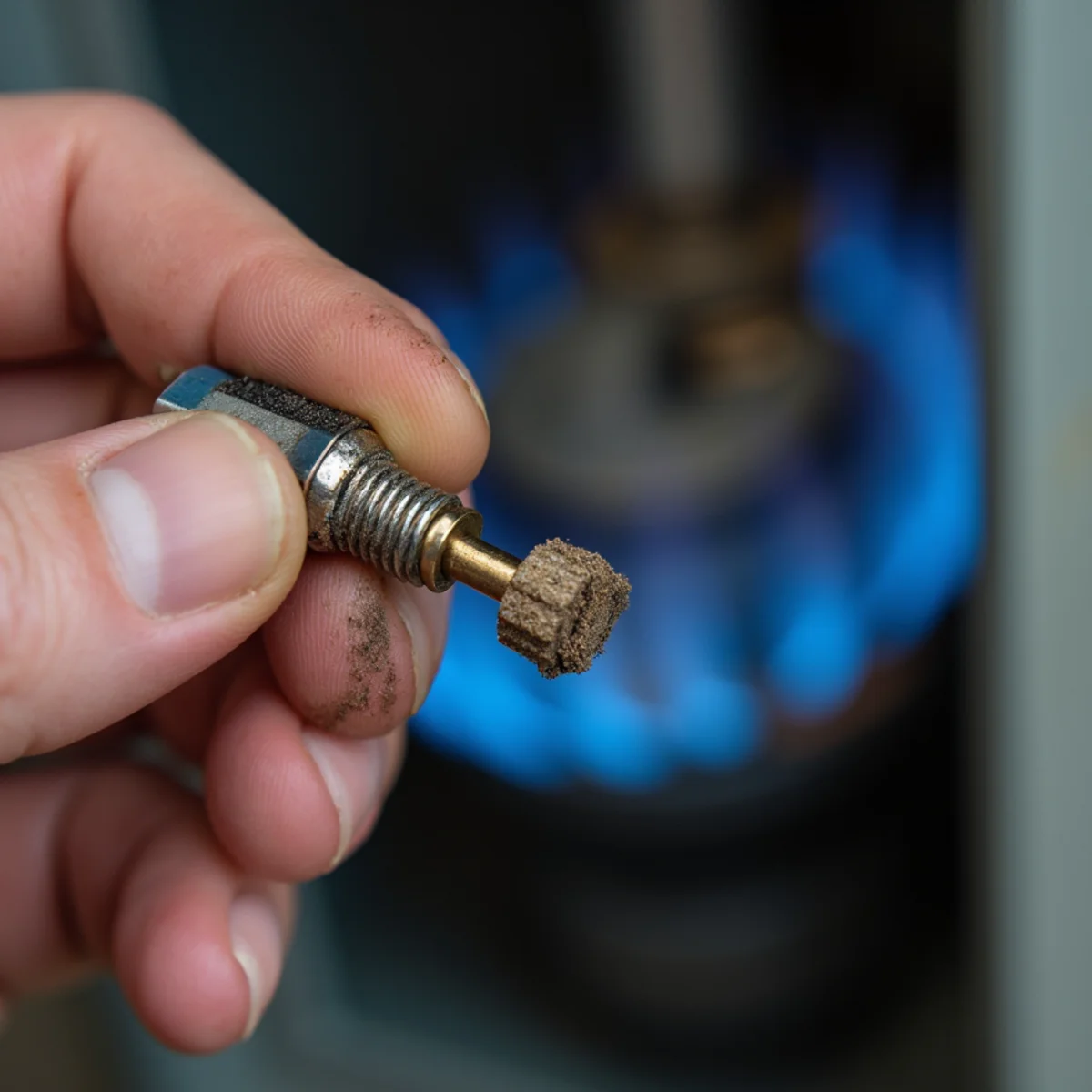
Burners light, then shut off seconds later
This classic pattern almost always means the flame sensor can't prove flame, often because it's coated with residue. It's one of the most common winter calls we get.
Blinking light on the control board
Most furnaces flash a fault code through a small window in the blower door. Note the pattern before you reset power, because it tells us where to start.
Loud bang or rumble at startup
Delayed ignition lets gas build up before it lights. Dirty burners or a weak ignitor can cause it, and it shouldn't be ignored.
Yellow, flickering flame
A healthy gas flame is mostly blue. Yellow or lazy flames suggest poor combustion, which can produce carbon monoxide.
CO alarm or headaches when the heat runs
Get everyone out, call the gas utility or 911, and don't run the furnace until it's inspected. A cracked heat exchanger or blocked flue can be the cause.
Furnace Repair in Burlington, Done in the Right Order
A gas furnace follows the same sequence every time it starts: the thermostat calls, the inducer motor clears the flue, a pressure switch proves the draft, the ignitor heats, the gas valve opens, the flame sensor confirms fire, and the blower comes on. When heat fails, one of those steps isn't completing. We trace the sequence instead of swapping parts until something works.
| Step in the sequence | What should happen | Common failure |
|---|---|---|
| Inducer starts | Small motor pulls exhaust through the flue | Worn bearings, seized motor |
| Pressure switch closes | Switch confirms the vent is drafting | Cracked hose, blocked vent or condensate trap |
| Ignitor heats | Hot surface ignitor glows orange | Cracked or burned-out ignitor |
| Gas valve opens | Burners light across the manifold | Failed valve or weak control signal |
| Flame is proven | Flame sensor sends a tiny current to the board | Dirty or corroded sensor rod |
| Blower starts | Warm air moves through the ducts | Failed capacitor, motor or control board |
Safety Comes Before Heat
Every furnace repair we do includes a look at the parts that keep combustion gases out of your living space. That means inspecting the heat exchanger for cracks or rust-through, checking the flue pipe for proper slope and secure joints, confirming the rollout and high-limit switches work, and measuring for carbon monoxide at the supply air when conditions call for it.
If we find a genuine safety hazard, we'll show it to you, explain it and red-tag the appliance if needed. We won't invent a cracked heat exchanger to sell a furnace, and we won't leave a dangerous one running either.
Heating Systems We Repair
- Natural gas and propane furnaces, including 80% and 90%+ high-efficiency condensing models
- Electric furnaces and air handler heat strips, where sequencers and elements burn out
- Blower motors, both PSC and variable-speed ECM types
- Thermostats and low-voltage wiring that stop the call for heat before it reaches the furnace
- Condensate traps and drains on high-efficiency furnaces, which can freeze or clog and lock out the unit
If your home runs on a heat pump with electric backup instead of gas, our heat pump repair service covers defrost and auxiliary heat problems in detail.
Piedmont Winters and Furnace Wear
Here in the Piedmont, furnaces sit idle for seven or eight months, then get asked to run hard the first cold week of November. Dust settles on burners, spiders nest in intake pipes, and flame sensors oxidize over the summer. A fall furnace tune-up catches most of that before it becomes a no-heat call.
When a cold snap or ice storm hits, calls spike across the region. If you're fully without heat, our no heat repair service is set up for exactly that. We regularly work on furnaces in the older homes around Graham, the gas-heated subdivisions near Mebane and the river communities around Swepsonville.
Inside the furnace: the readings behind a no-heat call
Flame sensor microamps
Once the burners light, the control board sends a small AC voltage through the flame, and the flame converts it into a tiny DC current measured in microamps. A clean sensor on a healthy furnace usually reads in the low single digits. As oxide builds on the rod, or the burner's ground path weakens, that number drops until the board can no longer trust it and closes the gas valve. The reading tells us whether a cleaning will last all winter or whether the sensor, the ground or the flame itself is the real issue.
Draft and gas in inches of water column
- Inducer draft is a negative pressure. Each pressure switch has its closing point printed on it, and if the inducer can't pull past that number, the cause is usually a blocked vent, a flooded condensate trap or a tired inducer rather than the switch.
- Inlet gas pressure checks the supply coming from the meter or the propane regulator. Natural gas and propane run at very different pressures, so readings are always compared with the plate for that fuel.
- Manifold pressure is what actually reaches the burners after the gas valve. It gets set to the plate specification and is never turned up to cover for a weak heating problem somewhere else.
Temperature rise and the limit switch
Every furnace lists an allowed temperature rise, the difference between return air and supply air. A rise above that range means too little air is moving across the heat exchanger. The high-limit switch then opens, the burners shut off, and the metal heats and cools far more often than it was built to. Over many Piedmont winters, that repeated stress is how a lot of heat exchangers end up cracked. Clearing a clogged filter, a matted blower wheel or a closed-off return often brings the rise back into range and ends the nuisance trips.
What's included in our furnace repair
A furnace repair from us is more than replacing the part that stopped the heat. These checks come with every call so you know the furnace is safe to run through the rest of the winter.
Carbon monoxide and combustion check
We sample the air near the furnace and at the supply registers, look at flame color and pattern, and check for scorching or soot around the burner compartment that points to poor combustion.
Gas pressure measured, not assumed
A manometer on the gas valve tells us whether manifold pressure matches the furnace's rating plate. Low pressure causes weak heat and condensation in the heat exchanger. High pressure overheats it.
Vent and intake inspection
Metal flues are checked for rust, slope and loose joints. On 90%+ furnaces, the PVC intake and exhaust pipes are checked for sags that trap water and for nests or leaves at the wall or roof termination.
Safety switch verification
High-limit, rollout and pressure switches are tested to confirm they open when they should. A jumped or failed safety switch is never left in place to get the heat running.
Blower, capacitor and filter
We check blower motor amperage, capacitor value on PSC motors and the condition of the blower wheel, and we look at the filter and return, because restricted airflow trips the limit switch and cracks heat exchangers over time.
Temperature rise confirmed after the repair
Before we leave, we measure the difference between return and supply air and compare it to the range printed on the furnace, so you know it is heating within its design range.
Our Furnace Repair Process
- 1
Safety check first
We check for gas odor, verify venting and look at the flame before running any diagnostics.
- 2
Read the fault code
The control board's flash code and a quick run through the startup sequence show us which step is failing.
- 3
Test components
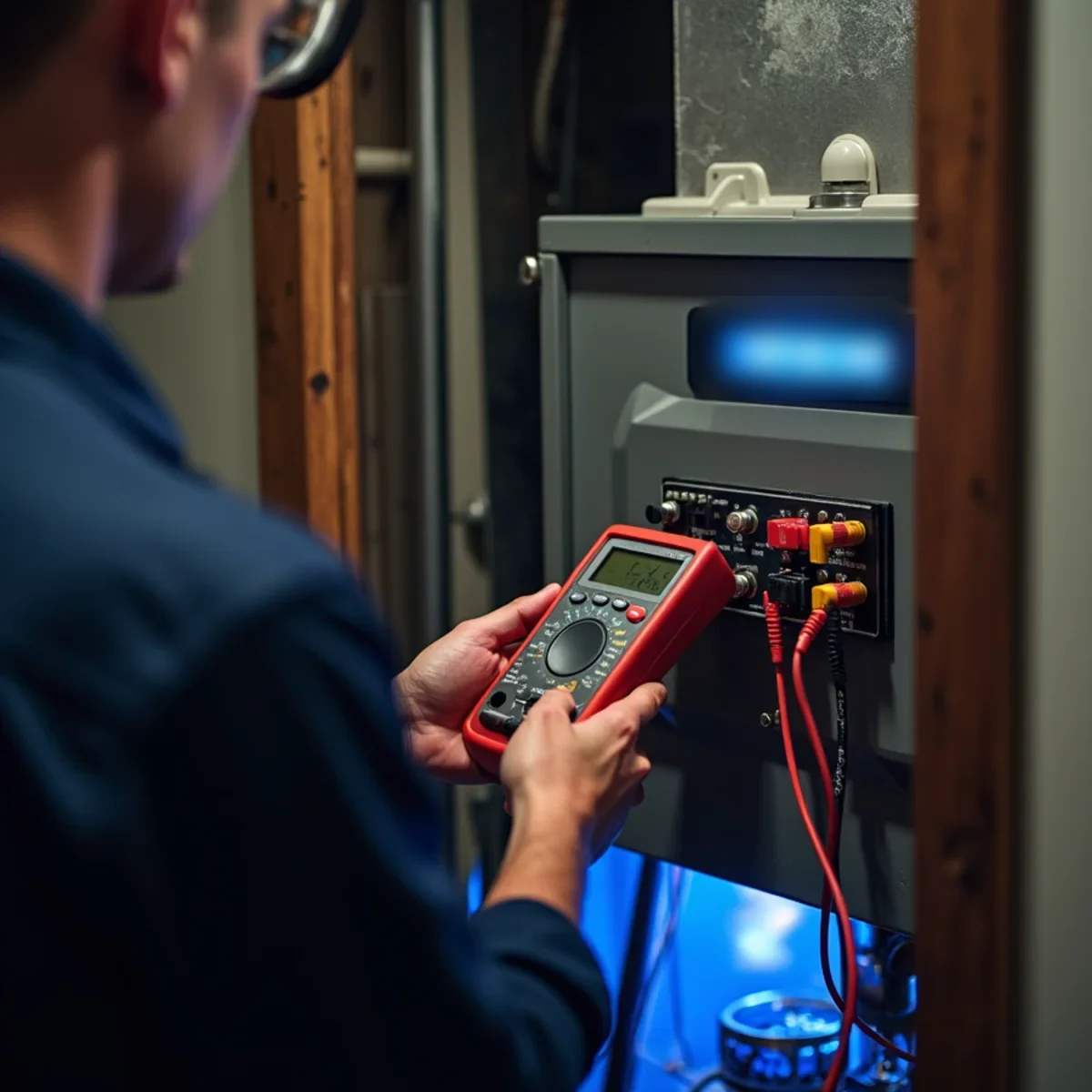
We measure ignitor resistance, flame sensor microamps, pressure switch operation, gas pressure and blower amp draw.
- 4
Written price, then repair
You approve the repair in writing. We fix it, run several complete heating cycles and confirm temperature rise across the furnace.
Furnace checks you can safely make vs. work for a licensed tech
Plenty of no-heat calls start with something simple, but anything involving gas, flame or venting stays with a professional.
Safe for you to check
- Make sure the thermostat is on Heat, the setpoint is a few degrees above room temperature, and the fan is set to Auto rather than On.
- Check that the furnace service switch, which often looks like an ordinary light switch on or near the unit, hasn't been flipped off by accident.
- Replace a dirty filter and confirm the blower door is fully seated, since most furnaces won't run while the door safety switch is open.
- On a high-efficiency furnace, walk outside and clear leaves, snow or nests from the white PVC intake and exhaust pipes at the wall or roof.
Leave to a licensed tech
- Gas valve and pressure adjustmentsAdjusting gas pressure means working on a live fuel line with a manometer. Mistakes can cause delayed ignition, sooting or a leak, and the work falls under state fuel gas code.
- Heat exchanger inspectionFinding a crack often means pulling burners, using an inspection camera and reading combustion gases. A missed crack can let carbon monoxide into the air your family breathes.
- Replacing ignitors and control boardsHot surface ignitors fail early if handled with bare fingers, and replacement boards must match the furnace's model and settings or safety checks in the startup sequence can be skipped.
- Diagnosing tripped safety switchesRollout, limit and pressure switches exist to stop fire and CO hazards. Jumping one to restore heat is dangerous, and every trip has a cause that needs to be found.
What Affects Furnace Repair Cost
Furnace repairs range from a quick cleaning to a major component. These are the main variables.
- Which component failed
- Cleaning a flame sensor is minor. An inducer motor, gas valve or control board is a bigger repair, and a heat exchanger is the largest.
- Furnace type and efficiency
- High-efficiency condensing furnaces have more parts, including secondary heat exchangers and condensate systems, and their components often cost more.
- Blower motor type
- Variable-speed ECM motors cost more to replace than standard PSC motors but use less electricity.
- Parts availability
- Common parts are on the truck. Brand-specific boards or valves may need to be ordered.
- Location of the furnace
- Furnaces in attics and crawlspaces take more time to service than those in a hallway closet or basement.
We explain what failed and give you a written price before any repair. If your furnace is near the end of its life, we'll show you the repair cost and the replacement cost side by side.
Red flags when a furnace repair turns into a sales pitch
Heating calls come with urgency and a safety angle, which makes them easy to oversell, so these are the moments to slow down and ask questions.
A cracked heat exchanger with no proof
A real crack can be shown with a photo, a camera inspection or combustion readings that change when the blower starts. If you're told the furnace must be replaced but see no evidence, ask what test found the problem. A red tag should always come with a clear explanation.
Control board replaced for an ignition problem
Boards are costly and often blamed for problems that start at a dirty flame sensor, a cracked ignitor or a loose ground wire. Before a board is swapped, ask for the fault code, the flame signal reading and the ignitor resistance that point to the board itself.
A safety switch jumped to restore heat
If a technician wires around a limit, rollout or pressure switch and calls the job done, the underlying fault is still there and the furnace can no longer protect itself. Look for a jumper wire at the switch and ask why it tripped in the first place.
Carbon monoxide warnings without a measurement
Carbon monoxide is serious, and any alarm deserves immediate action. But a claim that your furnace is leaking CO should be backed by readings from a calibrated meter at the flue, the supply registers or the living space. Ask to see the numbers and where they were taken.
Why choose Littlejohn HVAC Solutions for furnace repair
Open 24/7 when the heat quits
Furnaces fail on the coldest night, not on a Tuesday afternoon. We are open around the clock for heating emergencies, and Jesse has come out on a Sunday when a household needed it.
A licensed tech on gas appliances
Gas work calls for training and care. Jesse is a licensed NC HVAC professional and the company is insured, so combustion and gas-valve repairs are handled by someone qualified to do them.
We won't invent a cracked heat exchanger
Our reviews repeatedly mention honest diagnosis and no upselling. If we find a real hazard, we show you. If the furnace only needs a sensor or an ignitor, that is what you pay for.
Clear explanations
You will hear what failed in plain terms and what you can do to prevent it, like changing the filter on schedule or keeping the intake pipe clear of leaves and snow.
Furnace Repair near you
We repair furnaces across Burlington and the surrounding counties. Gas furnaces are common in established neighborhoods of Elon and Glen Raven, while many country homes around Efland and Yanceyville run on propane with a tank in the yard. We also take heating calls in Greensboro, where attic furnaces in two-story homes are a frequent source of no-heat and condensate problems. If you are within roughly 50 miles of Burlington, call and we will give you an honest arrival window.
We provide furnace & heating repair throughout Burlington and Alamance County, including: