Short answer: A commercial HVAC maintenance plan for a Burlington business should include spring and fall inspections of every rooftop unit or split system, filter changes between visits, coil cleaning, belt and drain service, gas-heat safety checks, and a written report with readings. Restaurants and high-traffic buildings usually need quarterly visits and priority repair scheduling.
A small business does not usually have a facilities manager. The HVAC gets attention when it quits, and it tends to quit on a Friday afternoon in July with a full dining room or a Monday morning with a waiting room full of patients. A maintenance plan is how you trade those surprises for scheduled visits.
This guide is for light commercial buildings: small offices, retail shops, churches, restaurants and similar spaces running packaged rooftop units or a handful of split systems. It covers what a plan should include, how often visits make sense and what to ask before you sign anything.
Why Commercial Units Need More Than a Home System
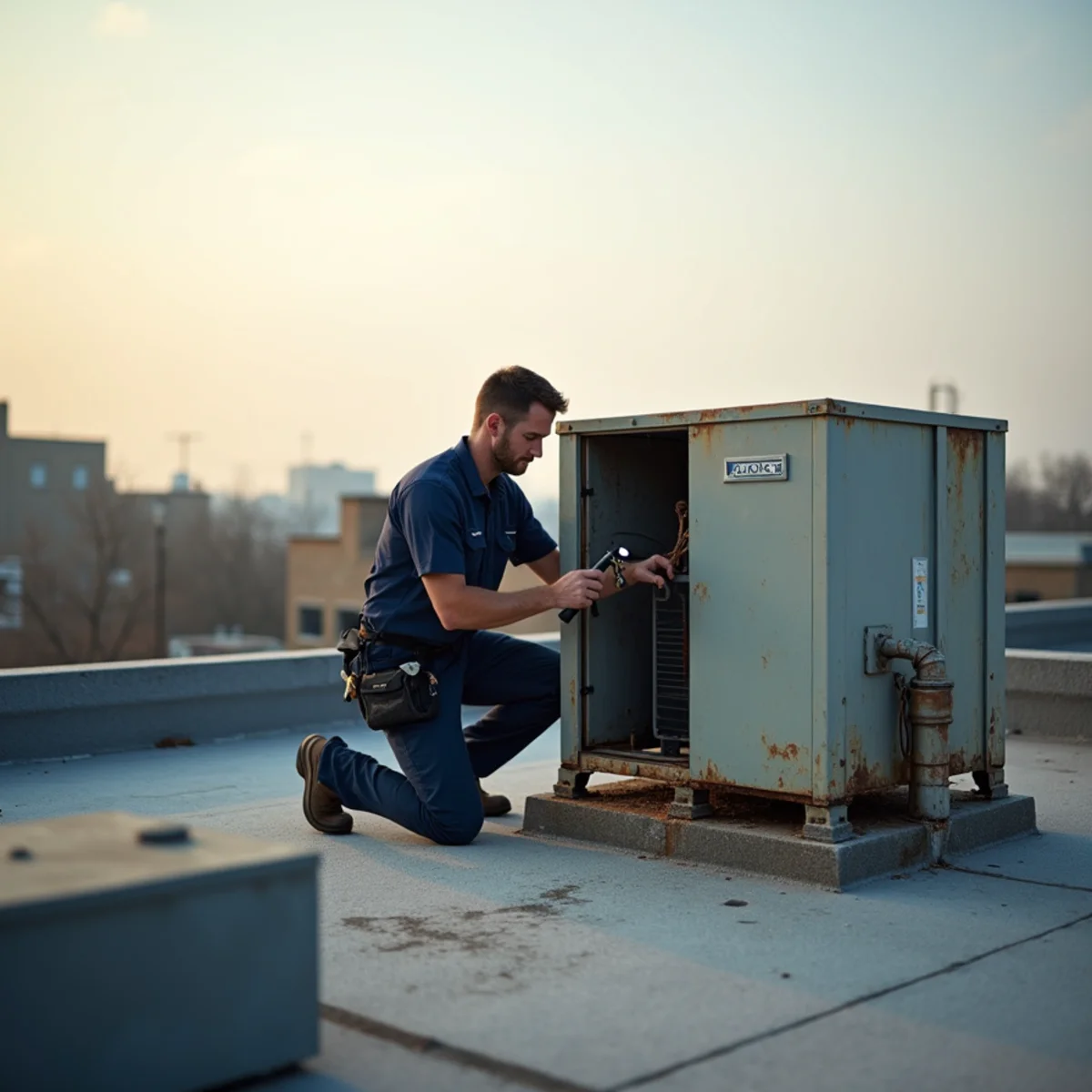
Commercial equipment runs longer hours, often with doors opening all day and more people, lights and equipment adding heat. Rooftop units sit in full sun and weather with nobody looking at them. Belts wear, drains clog with roof debris and economizer dampers stick without anyone noticing until the energy bill jumps.
- Longer run hours put more wear on belts, bearings, contactors and compressors.
- Higher internal loads from people, cooking and equipment push units closer to their limits.
- Out-of-sight equipment on the roof means small problems grow for months.
- Ventilation requirements mean outside air is part of the design, which brings in more humidity and pollen.
There is also a business cost that a homeowner does not face. When a home AC fails, the family is uncomfortable. When a restaurant's unit fails on a Saturday, food safety, staff comfort and a full night of sales are all on the line. That downtime is usually worth more than the maintenance that would have prevented it.
What a Typical Visit Schedule Looks Like
Most light commercial buildings in the Burlington area do well with two full inspections a year, spring and fall, plus filter changes in between based on how dirty the building gets. Restaurants and high-traffic spaces often need more.
| Visit | Timing | Main tasks |
|---|---|---|
| Spring cooling inspection | March–April | Clean condenser coils, test capacitors and contactors, check refrigerant charge, clear condensate drains and pans, check belts and bearings, verify economizer operation |
| Summer filter visit | June–July | Change filters, check drains, spot-check coil condition and amp draws during peak load |
| Fall heating inspection | September–October | Inspect gas heat section and heat exchanger, test ignition and flame sensor, check venting and safeties, test heat pump defrost where applicable |
| Winter filter visit | December–January | Change filters, confirm thermostat schedules, check for roof curb leaks and cabinet damage after storms |
What Different Businesses Need
Small offices and medical suites
Comfort complaints and indoor air quality are usually the issues. Tenants fight over thermostats, and one unit often serves rooms with very different loads. Filter upgrades and simple zoning or balancing adjustments help, and indoor air quality improvements are worth discussing for spaces where people sit all day.
Retail shops
Front doors that open constantly let in heat, humidity and dust. Filters load faster and units run longer. Programmable schedules matter too, since there is no reason to cool an empty store all night.
Churches
Church buildings have an odd pattern: light use most of the week, then a full sanctuary for a few hours. Equipment sits idle, then gets asked to cool a large room packed with people. Maintenance should include checking that thermostat schedules start the system early enough before services, and inspecting units that may have sat unused long enough for drains to dry out or pests to move in.
Restaurants
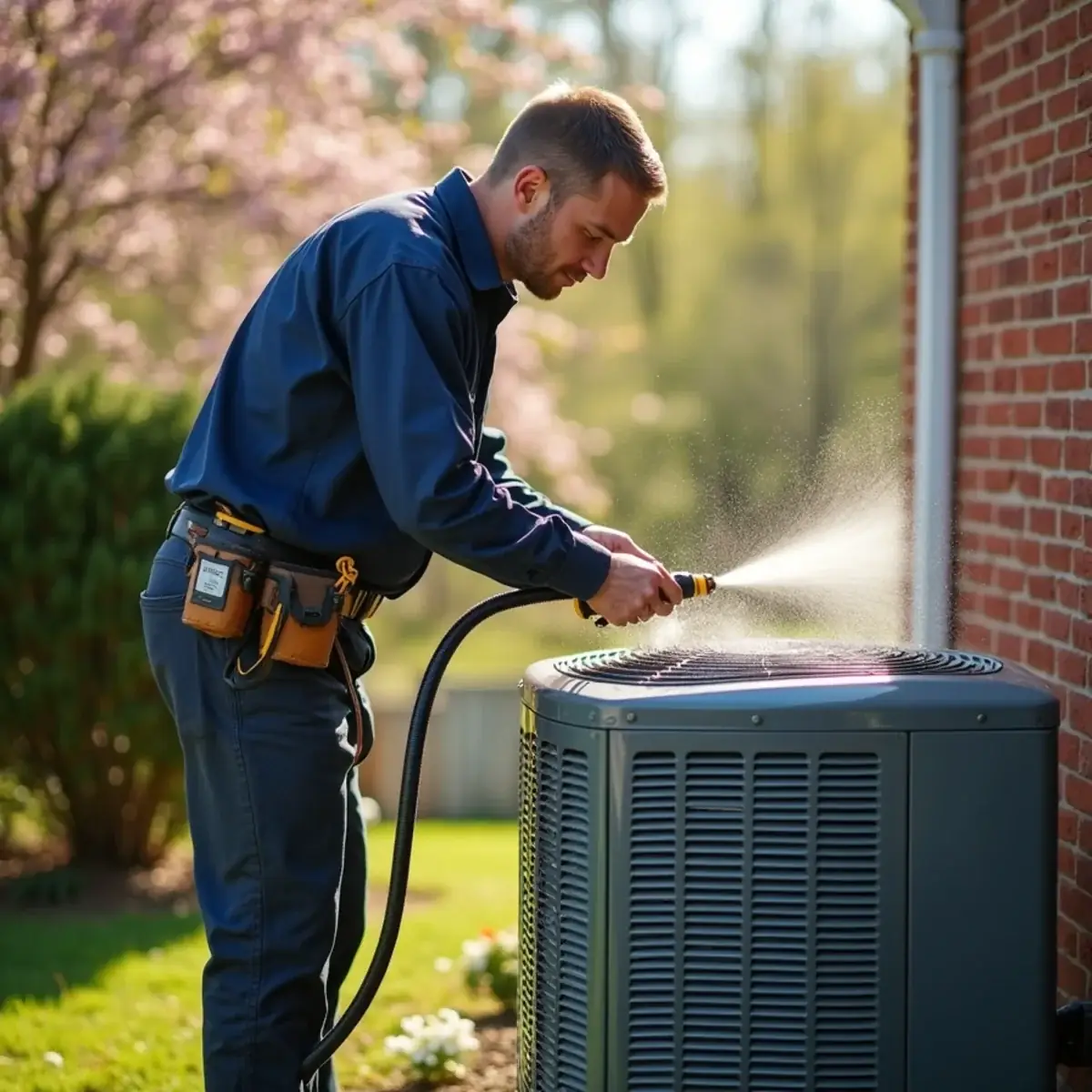
Kitchen exhaust puts grease in the air, and rooftop condenser coils near exhaust fans can get coated with a sticky film that a garden hose will not remove. Kitchens also create big heat loads and need makeup air. Restaurants usually benefit from quarterly visits and more frequent coil cleaning.
What to Ask Before You Sign a Plan
Plans vary a lot, and the price only means something when you know what is included. We do not publish plan pricing because it depends on the number of units, their access and how often they need attention. Whatever contractor you use, get these answers in writing.
- How many visits per year, and what is done at each one?
- Are filters, belts and coil cleaning included, or billed separately?
- Do plan customers get priority scheduling when something breaks?
- Are repair discounts included, and on what?
- Will you provide a written report with readings after each visit?
- What are the cancellation terms?
- Who actually does the work, and do they know rooftop and gas-pack equipment?
Serving Businesses Around Burlington
Much of our commercial work is within a short drive of Burlington, including downtown storefronts and small offices in Graham near the county courthouse and growing business areas around Mebane along the interstate. We call ahead when we are on the way, and we schedule around your hours when we can so service does not disrupt customers.
When something does break between visits, plan customers are first in line. If a unit fails on a busy day, our emergency HVAC repair service is set up for same-day response on most calls.
Small-business HVAC upkeep: myths vs. facts
Myth: Brand-new rooftop units don't need maintenance for the first few years.
Fact: New units still collect roof debris in their coils and drain pans, and the condensate trap installed at startup can dry out or clog in the first season. Manufacturers also expect documented maintenance to keep parts coverage intact. The first couple of years are when installation issues such as loose wiring or a wrong belt tension show up and are cheapest to correct.
Myth: If the gas heat comes on, the heat section is working safely.
Fact: A rooftop gas pack can light and warm the building while its heat exchanger is cracked or its flue is partially blocked. Those faults can send combustion gases where they don't belong, including toward the outside-air intake. A fall inspection checks burners, flame, venting, safeties and the heat exchanger itself, which is why heating checks belong in every plan.
Myth: Leaks around the rooftop unit are the roofer's problem.
Fact: Many roof leaks near HVAC equipment start at the unit: a failed curb gasket, an overflowing condensate pan or a drain line dumping water onto the membrane. Panels dropped during careless service can puncture the roof, too. A good maintenance visit checks the curb and drain routing, and the tech should walk the roof carefully and report damage rather than walk past it.
Myth: Setting the fan to auto is always the efficient choice for a business.
Fact: In an occupied commercial space, the outdoor air required for ventilation usually arrives only when the fan runs. With the fan on auto, the building gets fresh air only while the unit is heating or cooling. Most commercial thermostats should run the fan continuously during business hours and switch to auto after closing, which a plan visit should verify.
Plans for businesses in Graham and Mebane
Our two closest commercial areas outside Burlington call for slightly different plans.
Around Court Square and Main Street in Graham, about 10 minutes from our base, many businesses occupy older downtown buildings. Equipment there was often added long after construction, so we plan for:
- Tight roof access through hatches or ladders, which affects how often filters can realistically be changed and which filter sizes to stock.
- Units that serve a storefront and an upstairs office on one thermostat, where balancing matters as much as the equipment.
- Visits timed before opening or after closing so shoppers and county-court traffic aren't interrupted.
In Mebane's growing business areas along the interstate, 15 to 20 minutes away, buildings are newer and the focus shifts. Spring pollen and dust from ongoing construction nearby load filters fast, and newer units with economizers need their controls checked so first-year settings don't drift. For businesses running split systems rather than rooftop units, the plan overlaps with our HVAC maintenance visits for homes, scaled to longer run hours.
From the field: what gets missed on small commercial roofs
Most rooftop units Jesse picks up from a new customer have been "maintained," meaning someone changed filters. These are the items that usually got skipped.
- Belt alignment, not just belt condition. A new belt on misaligned or worn pulleys wears out within months and robs airflow. Checking the sheaves and tension is part of the job.
- Economizers stuck open. A damper stuck open in July pulls hot, humid outdoor air into the building all day. The unit runs constantly and the space still feels sticky, and nobody looks at it until the bill arrives.
- Dry or missing condensate traps. Many rooftop units pull the drain pan under negative pressure. Without a properly sized trap that holds water, the pan won't drain and water ends up inside the unit or through the ceiling.
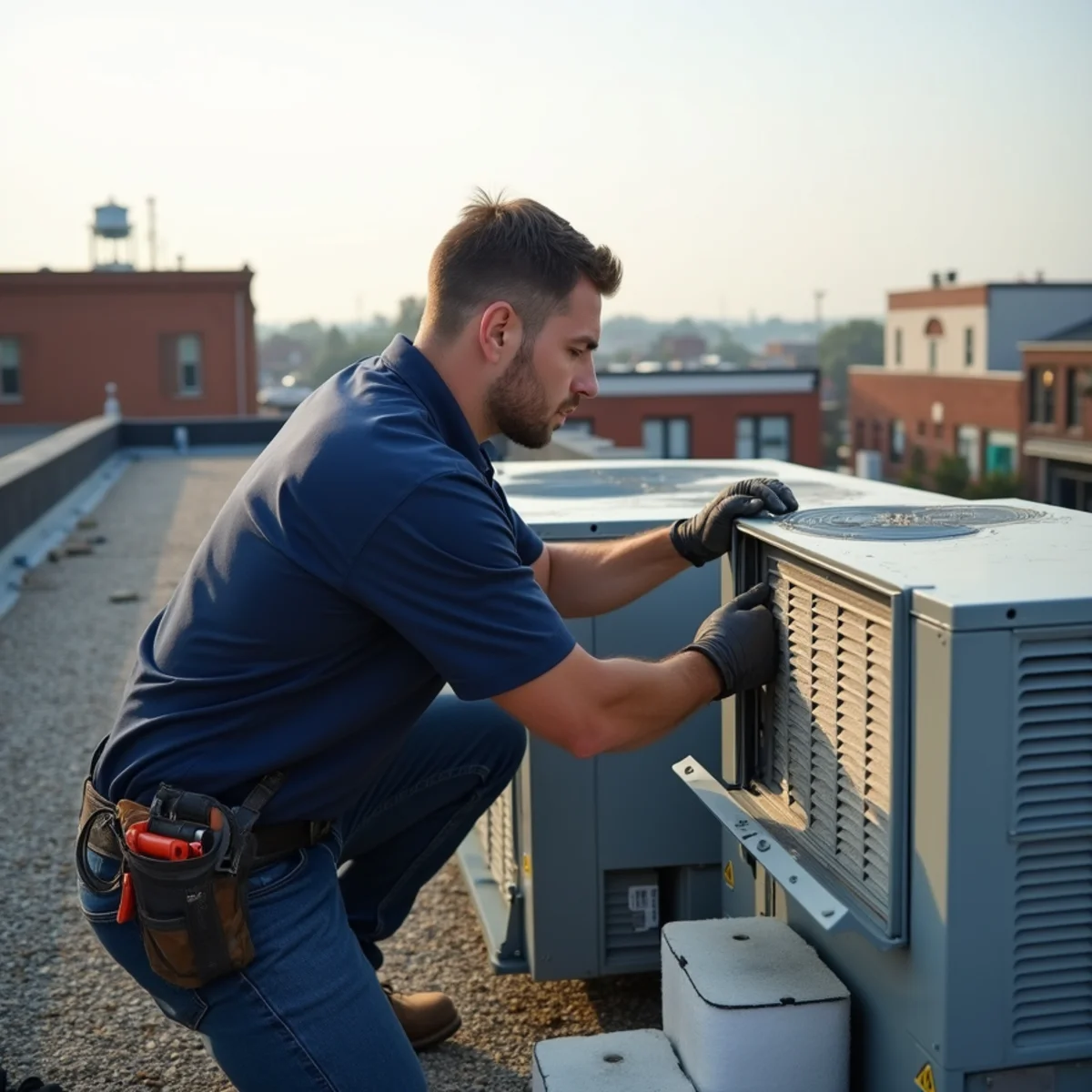
- Filter racks with gaps. Missing or wrong-size filters leave open space, and the coil catches the dirt instead.
- Thermostat schedules. After a power outage or a staff change, schedules drift and units cool an empty building overnight.
An honest trade-off: a plan with parts and labor bundled in costs more up front and makes budgeting predictable. A visits-only plan with repairs billed as needed costs less if your equipment is newer. We'll tell you which one fits your units. We also stay within light commercial work, so if your building runs a chiller or a large central plant, we'll say so up front. See our commercial HVAC service for what we cover.
Set Up a Plan That Fits Your Building
The right plan depends on your equipment, your hours and your business. Tell us what you have and how you use the building, and we will put together a written maintenance plan with exactly what is covered. Start with a walk-through of your units through our light commercial HVAC service.
Frequently asked questions
How many maintenance visits does a small commercial building need?
Two full inspections a year, spring and fall, is the baseline for most offices, shops and churches. Buildings with heavy traffic or dusty conditions add filter visits in between. Restaurants often need quarterly service because of grease, heat and longer operating hours.
Do you work on rooftop units and gas packs?
Yes. Packaged rooftop units, including gas-electric packs and heat pump packs, are common on light commercial buildings in the Burlington area. We service, repair and replace them on small commercial buildings. Large chilled-water or central plant systems are outside our scope.
Can maintenance lower our energy bills?
Often, yes. Dirty coils, slipping belts, stuck economizers and bad thermostat schedules all waste energy quietly. Correcting them usually shows up in lower run time and power use. How much you save depends on how neglected the equipment was to begin with.
Local service for this topic

Written by Littlejohn HVAC Solutions, LLC. Owner Jesse Littlejohn is a licensed HVAC professional serving Burlington and Alamance County. About us