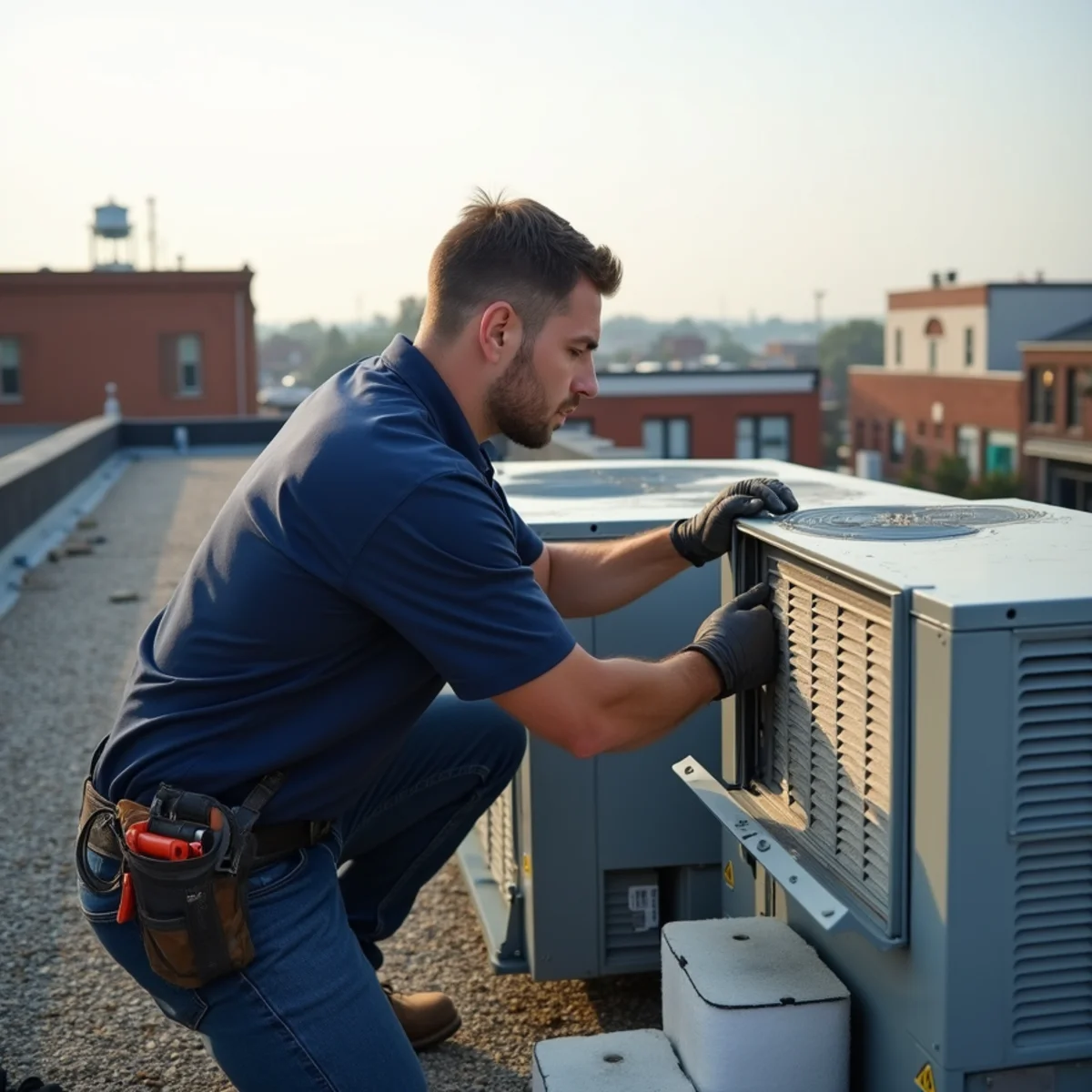
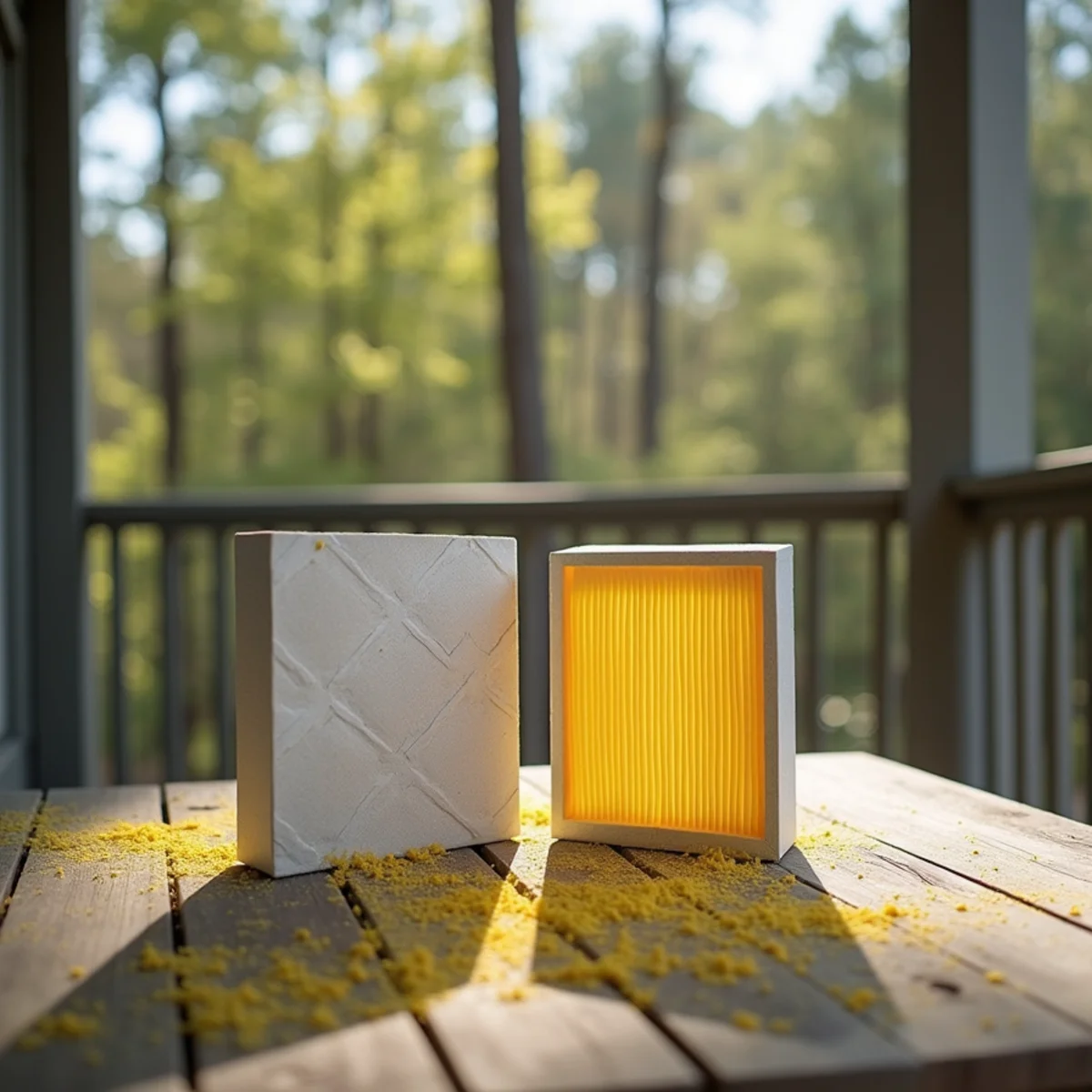
Short answer: During Piedmont pollen season, check a standard 1-inch HVAC filter every two to three weeks and plan to replace it about monthly, sooner if it looks yellow or gray across the face. Households with allergies, pets or wooded lots may need changes every few weeks, while a 4- or 5-inch media filter lasts longer.
Anyone who has lived in the Piedmont knows yellow season. Sometime in late March, pine trees start releasing pollen, and within days cars, porches and window sills are coated in a green-yellow film. Oak pollen follows close behind and overlaps into April. Your HVAC filter is catching a share of all of it.
The short answer: during peak pollen, check a standard 1-inch filter every two to three weeks and plan to change it about monthly, sometimes sooner. The longer answer depends on the filter type, its MERV rating and what your blower can handle.
What Is Actually in the Air
The visible yellow dust is mostly pine pollen. Pine grains are large, which is why they settle on everything, and even a basic filter traps most of them. The trouble for allergy sufferers is often oak, grass and other pollens that are smaller and more irritating, plus pollen fragments that break apart after rain. Those finer particles need a better filter to catch.
Pollen also comes in through open windows, on clothes and on pets. A filter helps, but it only cleans air that passes through the system. That is why running the fan and keeping windows shut on high-count days makes a difference.
MERV Ratings in Plain Terms
MERV (Minimum Efficiency Reporting Value) is a 1-to-16 scale for residential and light commercial filters. Higher numbers catch smaller particles, but denser media also resists airflow more. Here is how the common ratings stack up during pollen season.
| MERV rating | What it catches well | Pollen-season check interval (1-inch) | Notes |
|---|---|---|---|
| MERV 1–4 (fiberglass) | Large dust, lint, most pine pollen | Every 2 weeks | Protects the equipment; does little for allergies |
| MERV 6–8 (pleated) | Pollen, dust mite debris, mold spores | Every 2–3 weeks, change about monthly | Good balance for most homes and most blowers |
| MERV 11 | Finer pollen, pet dander, some fine dust | Every 2–3 weeks | Check static pressure in a 1-inch slot |
| MERV 13 | Very fine particles, much smoke and bacteria-size material | Every 2 weeks in a 1-inch slot | Best in a 4- or 5-inch media cabinet |
Why a Higher MERV Filter Can Backfire
Every blower is designed to push air against a certain amount of resistance, called total external static pressure and measured in inches of water column. Many residential systems are rated around 0.5 inches. The ductwork, coil and filter all use up part of that budget.
A 1-inch MERV 13 filter packed with pollen can eat a big chunk of that budget by itself. When static pressure climbs too high, airflow drops. Then the problems show up: rooms that do not cool, an indoor coil that freezes, a furnace that trips its high-limit switch, and a variable-speed blower motor that ramps up and burns extra power trying to compensate.
The fix: more surface area
A 4- or 5-inch media filter cabinet has several times the surface area of a 1-inch filter. The air moves slower through the media, so a MERV 11 or 13 filter causes far less resistance. These filters also last longer, often several months outside pollen season. For allergy households, a media cabinet is usually the best upgrade for the money.
Before recommending one, we measure static pressure across the filter, coil and ducts. If the ducts themselves are undersized, the filter is just the last straw, and the real fix may involve duct modifications or new ductwork.
A Pollen-Season Filter Routine
- Write the filter size and MERV rating on a piece of tape near the filter slot so you always buy the right one.
- Change the filter at the start of yellow season, usually mid to late March.
- Pull it and look every two weeks through April. If it is gray or yellow across the face, replace it.
- Change again at the end of pollen season in May, before AC season gets serious.
- Return to your normal interval for summer, typically one to three months for 1-inch filters.
Mark the change date on the filter frame with a marker when you install it. During yellow season it is easy to lose track of whether you changed it two weeks ago or six, and the date settles the question at a glance.
Homes with pets, ongoing construction nearby or a smoker will need shorter intervals year-round. Homes with a return in a dusty spot, such as a hallway near an exterior door, load filters faster too.
Chapel Hill and Heavily Wooded Neighborhoods
Towns with thick tree canopy get hit harder. Around Chapel Hill, many established neighborhoods sit under mature pines and oaks, and filters there can load up noticeably faster than in newer open subdivisions. The same goes for wooded lots across Orange and Alamance counties. If your driveway turns yellow every spring, assume your filter is working overtime.
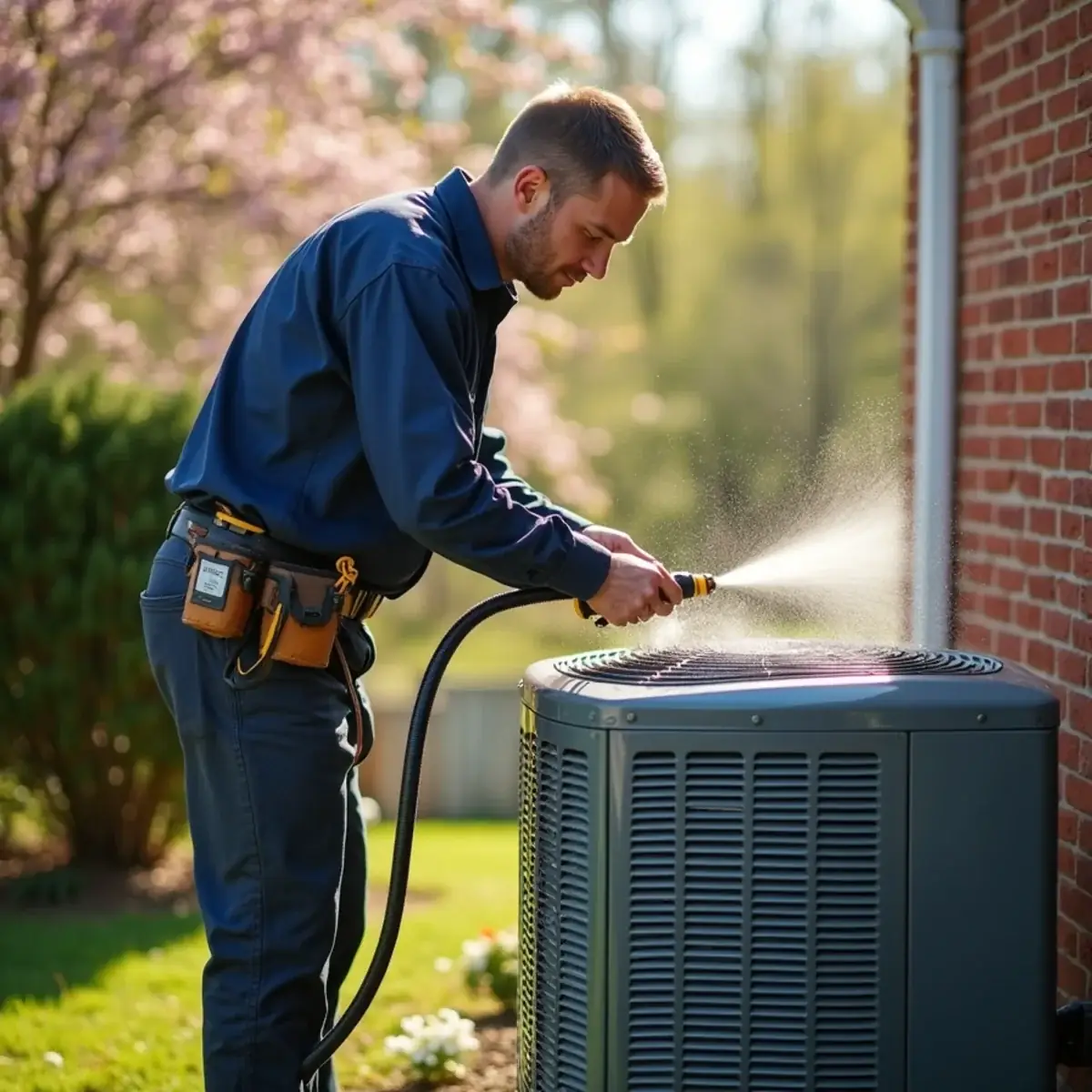
Pollen season also coats the outdoor condenser coil. Rinsing it gently once pollen drops off, or having it cleaned during spring HVAC maintenance, keeps the system from starting summer at a disadvantage.
HVAC filters and pollen: myths vs. facts
Myth: If the filter doesn't look dirty, it can stay in longer.
Fact: Color is an unreliable gauge. Finer pleated media traps particles deep in the fibers, and darker filters hide loading well. A filter can look passable and still restrict airflow noticeably. During pollen season, go by the date written on the frame as much as the appearance, and replace it on schedule even if it looks lightly tinted.
Myth: Running the system without a filter for a day or two is harmless.
Fact: Without a filter, pollen and dust go straight onto the wet indoor coil and the blower wheel, where they stick. Many indoor coils sit sealed in their housing and can't be fully cleaned without major labor. A coated coil moves less air and removes less moisture. If you're out of filters, leave the system off or run it only briefly until you buy one.
Myth: An ozone generator or ionizer clears pollen better than a filter.
Fact: Ozone is a lung irritant, and the EPA advises against using ozone generators in occupied homes. Some ionizers also produce ozone as a byproduct. None of these devices capture pollen the way properly sized media does. A good filter that fits tightly, combined with closed windows on high-count days, is still the most dependable way to reduce indoor pollen.
Myth: Once the yellow dust is gone, pollen season is over.
Fact: The visible yellow wave is mostly pine, which fades by early May. Grass pollens keep going into early summer, and weed pollens such as ragweed arrive in late summer and fall. Those grains are smaller and invisible on your porch, but they still reach the filter. Allergy households should keep a tighter change schedule well beyond the yellow weeks.
Filter habits for Chapel Hill homes under the canopy
Chapel Hill is about 40 minutes from our base, and we group calls there into planned runs through southern Orange County. That makes prevention worth more than usual. A pollen-choked filter that freezes the coil on a Saturday is a repair that a two-week filter check would have avoided.
A few details specific to homes under Chapel Hill's tree canopy:
- Rentals near campus: tenants rarely change filters they can't reach. Moving the filter to an accessible return grille, with the size written beside it, keeps it from sitting unchanged all semester.
- Mid-century houses with in-slab ducts in Coker Hills and Lake Forest: a filter only cleans air at the return. Rust and musty debris picked up inside old buried supply ducts reaches the rooms downstream of the filter, so no filter upgrade fixes that.
- Hillside homes with basement air handlers: damp basements shorten filter life, since moisture helps dust and pollen cake onto the media.
If your filter loads up faster than you can keep up with, our spring maintenance visit includes a static pressure reading so we can size a filter setup your blower can handle.
From the field: the filter mistakes Jesse finds most
On service calls, the filter problem usually isn't how often it's changed. It's how it's installed.
- Gaps around the filter. Nominal sizes run slightly small, and a loose filter lets pollen stream around the edges and straight onto the coil. If you can see daylight around the frame, a thin foam gasket or the correct actual size fixes it.
- Two filters in one system. Homes with a filter grille in the hallway and another filter slot at the air handler often have both filled. That doubles the airflow restriction. Pick one location and leave the other empty.
- Arrow pointing the wrong way. The airflow arrow should point toward the blower. A backward pleated filter can load unevenly and collapse.
- Comparing retail ratings. Some stores use their own rating scales instead of MERV. Check the package for the MERV number so you're comparing like with like.
An honest trade-off on upgrades: a media filter cabinet is the best long-term fix for allergy households, but it takes space near the air handler and a modification to the return. In a tight closet or a crawlspace unit, a well-fitted MERV 8 changed on time can outperform a higher-rated filter that chokes the system. Measuring static pressure before and after tells us which way to go, and it's part of our indoor air quality and airflow testing.
Better Air Without Choking Your System
The right filter is the one that catches what bothers you without starving the blower. If allergies are a problem in your house, or you are not sure your system can handle a higher MERV, ask us about indoor air quality upgrades like media filters and airflow testing. We will measure first and explain the options, with no pressure to buy more than you need.
Frequently asked questions
Is MERV 13 too high for a home HVAC system?
Not always, but often in a 1-inch slot. Many systems can handle MERV 13 in a 4- or 5-inch media cabinet because the larger surface area keeps resistance low. The only way to know is to measure static pressure with the filter installed. If readings climb above the blower's rating, step down or upgrade the cabinet.
Should I run my HVAC fan continuously during pollen season?
Running the fan on 'on' filters the air more often, which can help on high-pollen days. The tradeoff is higher power use with older motors and, in summer, moisture on the coil evaporating back into the house. A circulate setting or a variable-speed blower on low is often a better balance.
Do washable filters work for pollen?
Most washable filters are low-efficiency and catch large particles like pine pollen but not the finer material that triggers allergies. They also need to be fully dry before going back in, or they can grow mold. For allergy relief, a disposable pleated or media filter is usually the better choice.
Local service for this topic

Written by Littlejohn HVAC Solutions, LLC. Owner Jesse Littlejohn is a licensed HVAC professional serving Burlington and Alamance County. About us