Short answer: An AC blows warm air most often because the thermostat is set wrong, a breaker or disconnect is off, the filter is clogged, a capacitor or contactor has failed, the indoor coil has frozen, refrigerant has leaked, or a condensate float switch has shut down cooling. Check settings, breakers and filter, then call a technician.
You hear the system running, you hold your hand up to the vent, and the air feels like the attic. It's one of the most common calls we get from May through September. The good news: a surprising number of them turn out to be simple. The bad news: some don't, and running a struggling system can turn a small repair into a big one.
Here's how we think through it, starting with the things you can check in five minutes and moving to what we test with gauges and meters.
Check These Before You Call
- Thermostat mode and setpoint. Make sure it's on Cool, set a few degrees below room temperature, and the fan is on Auto. If the fan is set to On, it will blow room-temperature air between cooling cycles.
- Heat pump mode. On a heat pump, an accidental switch to Heat or Emergency Heat will blow warm air on purpose.
- Breakers and the outdoor disconnect. The indoor blower and outdoor unit are often on separate breakers. If the blower runs but the outdoor fan is still, check both, plus the pull-out disconnect near the condenser.
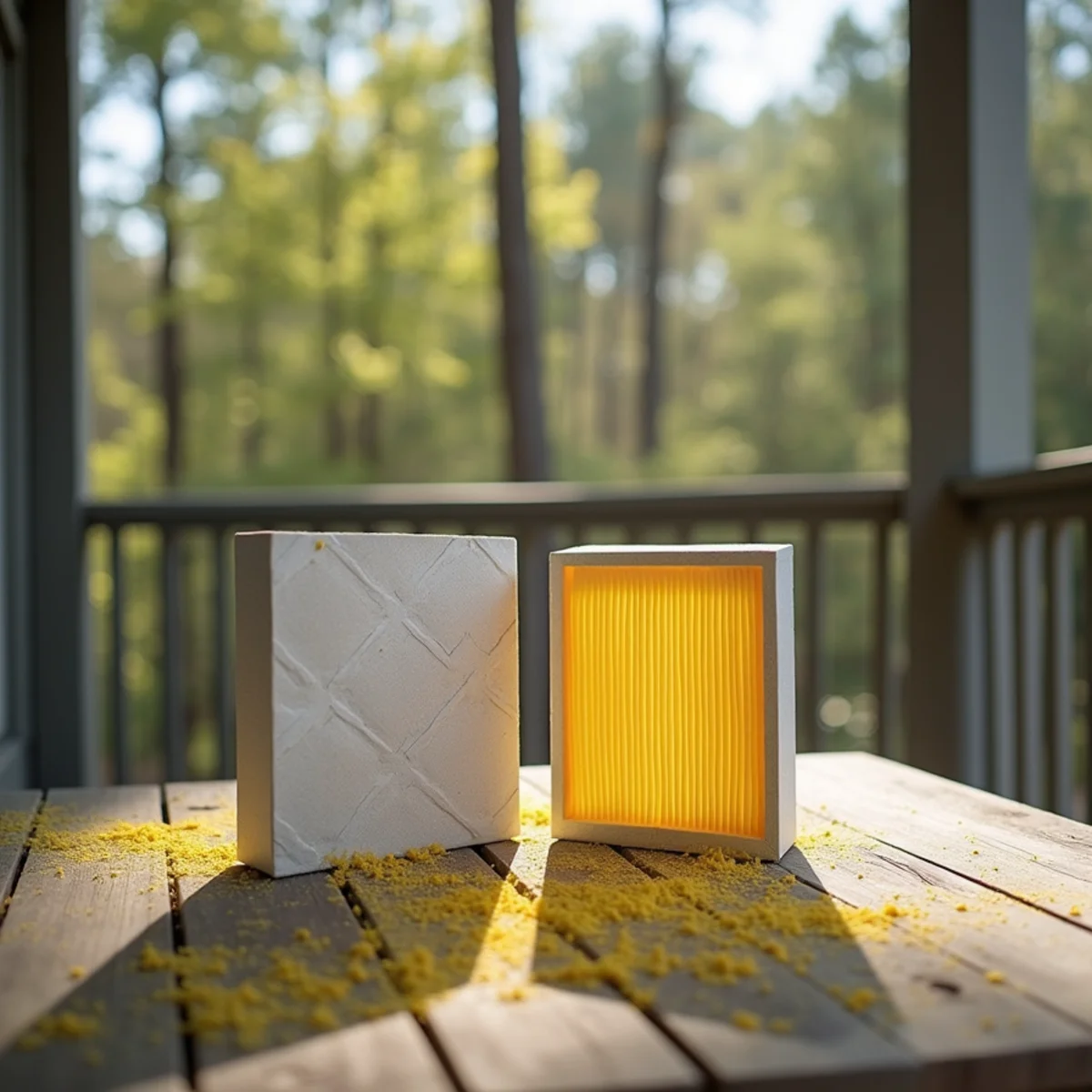
- The air filter. A clogged filter can starve the indoor coil of airflow until it freezes and stops cooling.
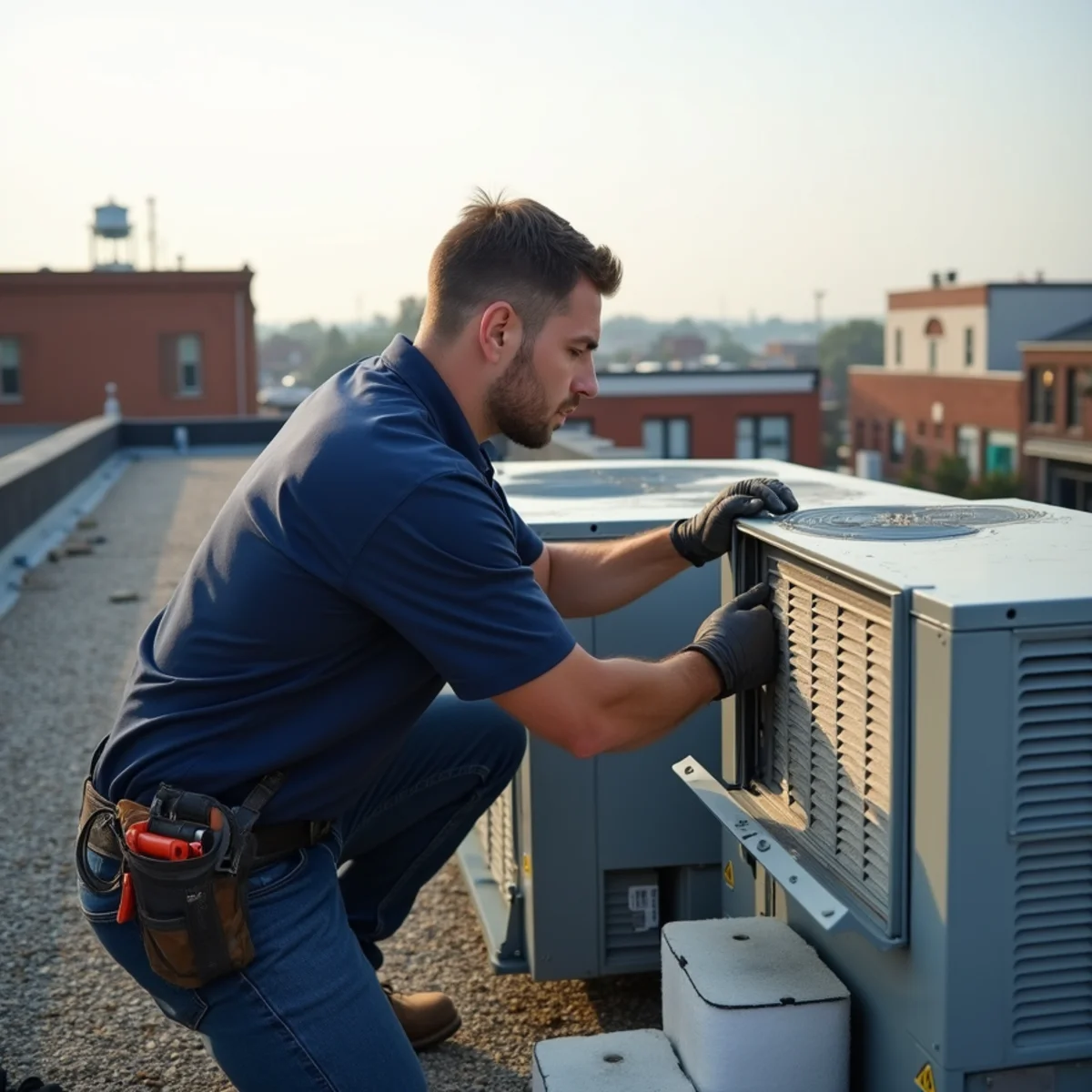
- The outdoor unit. Look for grass clippings, cottonwood fluff, or a matted coil. Is the fan turning? Is it humming without starting?
The Usual Suspects
A failed capacitor
This is the number one cause we find on hot afternoons. The capacitor gives the compressor and fan motor the jolt they need to start. When it weakens, the outdoor unit may hum, the fan may not spin, and the indoor blower keeps pushing uncooled air. It's an inexpensive part and a quick fix when caught early.
A stuck or burned contactor
The contactor is the switch that powers the outdoor unit when the thermostat calls for cooling. Pitted contacts, ants nesting in it, or a burned coil can keep it from closing.
A frozen evaporator coil
Low airflow or low refrigerant can drop the coil temperature below freezing. Ice builds up, air can't pass through, and the vents go weak and warm. You may see frost on the copper line at the outdoor unit or water around the indoor unit as it thaws.
Low refrigerant from a leak
Refrigerant doesn't get used up. If it's low, there's a leak, most often at the evaporator coil, a flare fitting, or a rubbed line. Topping it off without finding the leak is a temporary patch at best.
A tripped condensate safety switch
Many systems have a float switch that shuts off cooling when the drain line backs up. The blower may still run while the outdoor unit sits idle. Algae in the drain line is the usual culprit.
Leaky return ducts in the attic
If a return duct in a hot attic has come apart, the system can pull in air that's well over 100 degrees. The AC may be working fine and still lose the battle.
What a Technician Actually Tests
| Test | What it tells us |
|---|---|
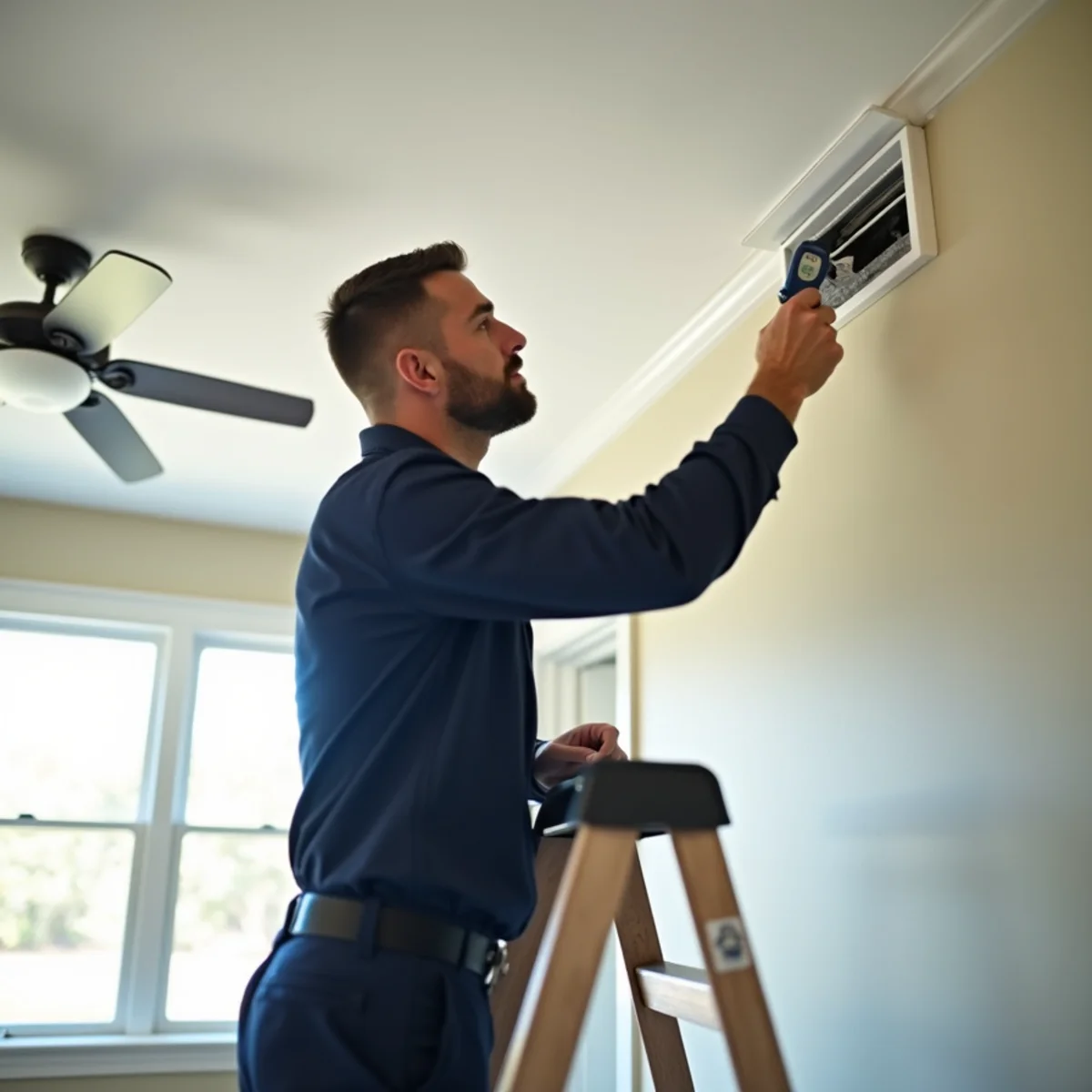
| Supply and return air temperature split | Whether the system is removing heat; a healthy split is usually around 15 to 20 degrees |
| Capacitor microfarad reading | Whether the capacitor is within its rated range |
| Compressor and fan amp draw | Whether motors are starting and running normally |
| Superheat and subcooling | Whether the refrigerant charge and metering device are working correctly |
| Static pressure and filter check | Whether airflow restrictions are causing freezing or poor cooling |
| Drain line and float switch | Whether a safety switch is shutting down cooling |
Handling refrigerant legally requires EPA Section 608 certification, and reading a charge correctly takes more than hooking up gauges. That's one reason we don't recommend adding refrigerant from a DIY can.
Warm Air Only at Certain Times?
Pay attention to when it happens. Warm air only in the late afternoon, when the house is hottest, can mean the system is undersized or losing capacity from a dirty outdoor coil. Warm air right after the system starts, then cooler air a few minutes later, is often normal on units with long duct runs through a hot attic. Warm air that comes and goes with a clicking sound at the outdoor unit points toward a contactor or a compressor tripping on its internal overload. Telling us those details on the phone helps us bring the right parts on the first trip.
When Warm Air Means Something Bigger
If the compressor has failed, or a major leak shows up on an older R-22 system, repair may not be the best spend. We'll lay out the options honestly. More than once, Jesse has found a simple fix on a system another company said needed replacing, and we'd always rather fix what's fixable.
Regular AC maintenance and tune-ups catch weak capacitors, dirty coils, and slow drains before they leave you sweating. If you have a heat pump, our heat pump repair service also covers reversing valve and defrost issues that can mimic cooling problems.
Local Service in Elon and Green Level
We handle AC repair in Elon, from rentals near the university to established neighborhoods around town, and provide air conditioning service in Green Level just north of Burlington. Both are close to home base, so same-day service on most calls is realistic, and we'll call ahead when we're on the way.
Warm air from the vents: myths vs. facts
Myth: Warm air from the vents means the compressor is dead.
Fact: Compressor failures are much less common than failures of the parts around them. A weak capacitor, a burned contactor or a tripped float switch all leave the compressor idle while the blower keeps pushing room air. Even a compressor that won't start may be held back by a failed start component. Winding and amp tests confirm it before anyone mentions replacement.
Myth: Setting the thermostat fan to On helps the AC cool better.
Fact: With the fan on continuously, the blower keeps moving air across a wet indoor coil between cooling cycles. That moisture evaporates right back into the house, so humidity climbs and rooms feel warmer at the same setpoint. Auto lets the coil drain after each cycle. On is useful for filtration in mild weather, not for summer cooling.
Myth: Closing vents in empty rooms pushes more cold air everywhere else.
Fact: Closed registers don't redirect much air; they raise static pressure. The blower moves less total air, ducts leak more under the extra pressure, and the indoor coil can drop below freezing. That's a direct route to a frozen coil and warm air from every vent. Leave supply registers open and let the system breathe the way it was designed.
Myth: Pressure washing the outdoor unit will restore cooling.
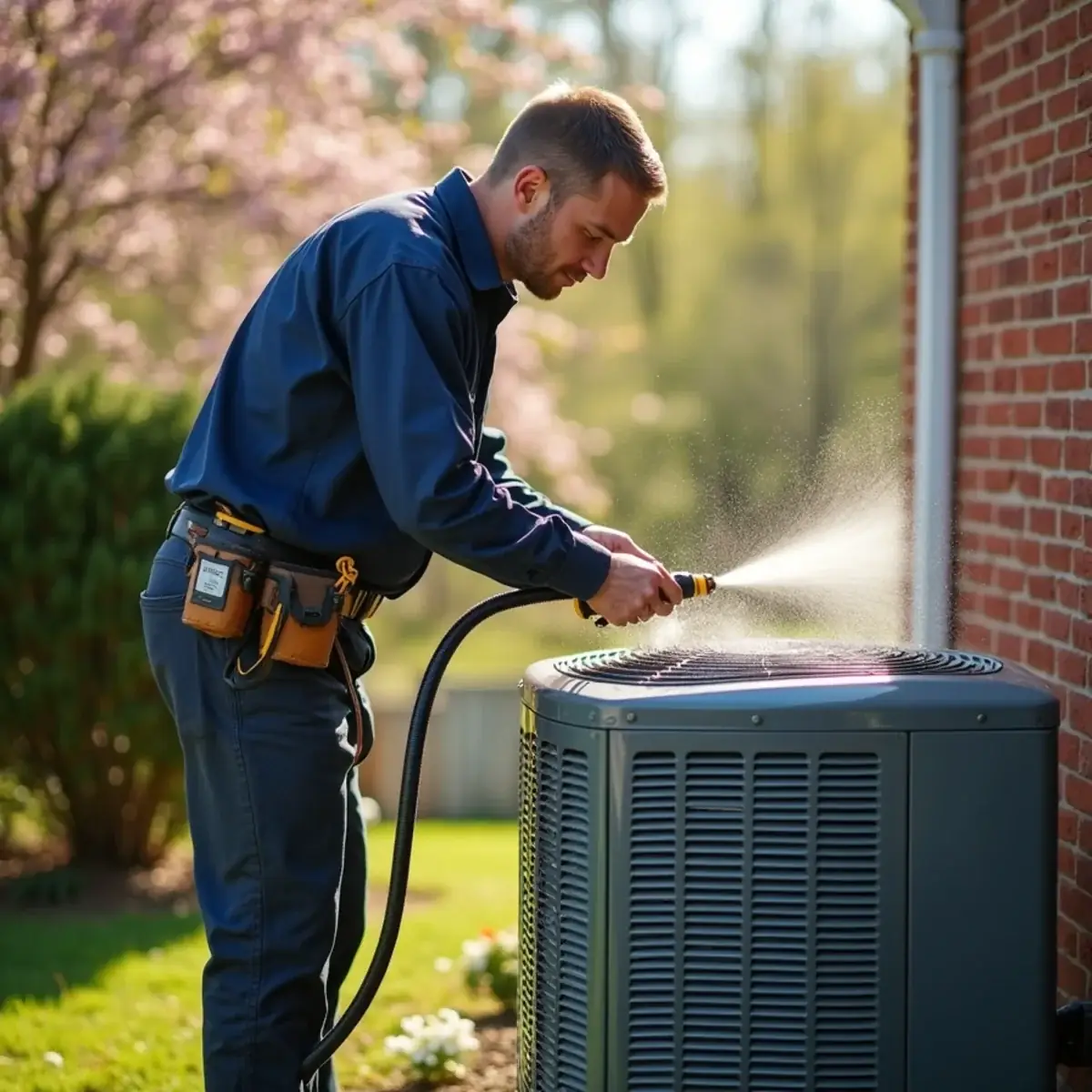
Fact: A pressure washer folds the thin aluminum fins flat and can drive debris deeper into the coil, which cuts airflow further. The right method is power off at the disconnect, then a gentle garden-hose rinse from the inside out where the fan shroud allows, or a coil cleaning by a technician. Flattened fins need straightening with a fin comb.
Warm-air calls in Elon rentals and Green Level homes
Elon, about 10 minutes from our base, produces a very seasonal version of this problem. Rental houses near the university sit half-empty through summer, then tenants move in during August and set the thermostat low. Within a week the calls start: vents blowing barely cool air and ice on the copper line outside. The usual causes are simple and preventable:
- A filter nobody has changed since the last lease started
- A couch or bookcase pushed against the return grille
- An algae-clogged drain line tripping the float switch in mid-afternoon
- April pollen still packed into the outdoor coil
Green Level, roughly 15 minutes out, sees warm air for different reasons. Many homes are all-electric, single-story houses with a packaged unit sitting low in an open yard, where mowers throw clippings straight into the coil. In manufactured homes, one end of the house blowing warm usually points to a crossover duct that has separated under the floor, which our mobile home HVAC service handles regularly.
From the field: reading the numbers correctly
The temperature split between return and supply air is a good first clue, but it moves with humidity. On a muggy July day much of the system's work goes into pulling water out of the air, so a split a few degrees under the usual range can be perfectly healthy. Jesse reads indoor humidity alongside the split before calling anything low.
Refrigerant readings depend on the metering device. A system with a fixed piston is charged by superheat; one with a TXV is charged by subcooling. Charging the wrong way is how systems end up overcharged, which can flood the compressor and cause as much trouble as a leak. Readings are also meaningless on a frozen coil, so an iced system has to thaw completely first, which can take a few hours with the fan running.
Finding the leak, not just the symptom
If the charge is low, the next job is locating the leak. We use an electronic detector and bubble solution at fittings and the coil, and on stubborn leaks we isolate sections and pressure-test with nitrogen. Evaporator coils often leak from tiny corrosion pinholes that don't show until the coil is under pressure.
The honest trade-off: a coil replacement on a system over ten years old can cost enough that replacing the whole system deserves a look. We'll price both. If the house is heating up fast with someone vulnerable inside, call for emergency AC repair instead of waiting.
Don't Let a Warm Vent Turn Into a Bigger Bill
If you've checked the thermostat, breaker, and filter and the air is still warm, shut the system off to protect the compressor and give us a call. Schedule AC repair with Littlejohn HVAC and we'll find out what's actually wrong before recommending anything.
Frequently asked questions
Why is my AC running but blowing warm air?
Common causes include a failed capacitor, a stuck contactor, a frozen evaporator coil, low refrigerant from a leak, a tripped condensate float switch, or the thermostat fan set to On. Check the thermostat, breakers, and filter first, then call a technician.
Should I keep running my AC if it's blowing warm air?
No. Turn cooling off at the thermostat. Running a system with a bad capacitor, frozen coil, or low charge can overheat and damage the compressor, which is the most expensive part to replace.
Can I add refrigerant myself?
We don't recommend it. Low refrigerant means there's a leak that needs to be found. Refrigerant work requires EPA Section 608 certification, and overcharging a system can cause as many problems as undercharging it.
Local service for this topic

Written by Littlejohn HVAC Solutions, LLC. Owner Jesse Littlejohn is a licensed HVAC professional serving Burlington and Alamance County. About us