Short answer: Crawlspace humidity in Alamance County comes from muggy summer air, bare soil and poor drainage, and it makes ducts sweat, pulls musty air into the system and forces the AC to run longer. The fix starts with drainage and a ground vapor barrier, then sealed, insulated ductwork, and a dehumidifier or encapsulation where moisture stays high.
Most homes in Alamance County sit over a crawlspace, and in July most of those crawlspaces are damp. Our summers bring warm, muggy air with dew points often in the upper 60s and 70s, and that air finds its way under the house through foundation vents and gaps.
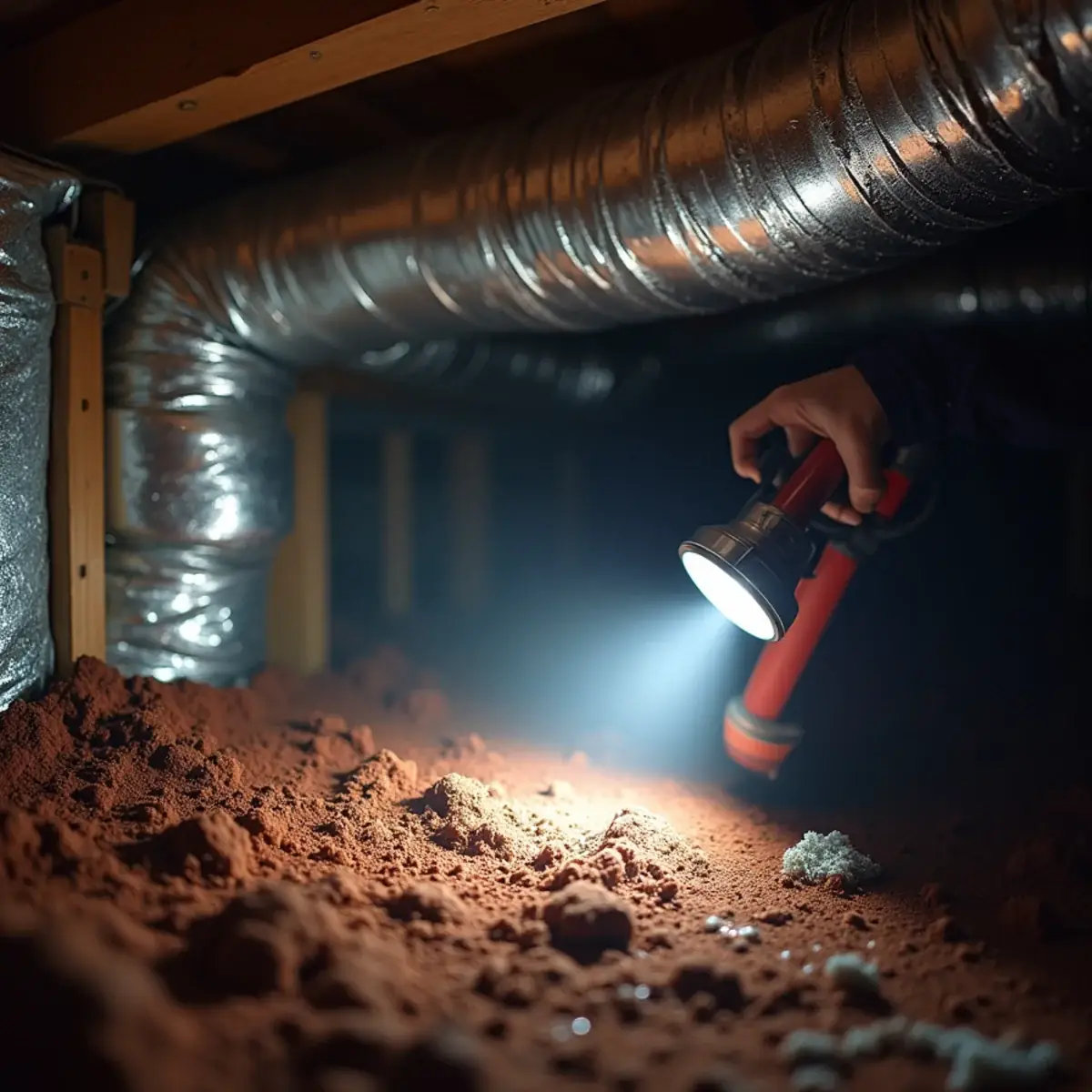
Down there, it meets cool surfaces: ductwork carrying air-conditioned air, refrigerant lines, and floor framing chilled from above. The result is condensation, and over time that moisture works its way into your ducts, your air, and your comfort.
Why Crawlspaces Get So Humid Here
There are three main sources of crawlspace moisture in the Piedmont:
- Humid outdoor air. Open foundation vents were once thought to dry crawlspaces out. In our climate, they often do the opposite in summer, letting in moist air that condenses on cooler surfaces.
- The ground itself. Bare soil constantly releases moisture. Without a vapor barrier, a crawlspace can pick up a surprising amount of water from the dirt alone.
- Water intrusion. Poor gutters, downspouts dumping against the foundation, and yards that slope toward the house all send water underneath. Low-lying lots near creeks and rivers are especially prone.
Homes near the river in Haw River and the low, wooded lots around Swepsonville are good examples. We see standing water, rusted duct straps, and soaked insulation in those crawlspaces more often than in homes on higher ground.
How Crawlspace Moisture Hits Your HVAC
Sweating ducts and wet insulation
When humid air touches a supply duct carrying 55-degree air, the duct sweats. If the insulation wrap is torn or compressed, water drips onto the vapor barrier or soaks into the insulation. Wet insulation loses its insulating value, sags, and eventually pulls the duct down with it.
Leaky ducts pulling in damp air
Return ducts run under negative pressure. Any gap in a return duct in the crawlspace pulls crawlspace air, with its moisture, dust, and musty smell, straight into your system and blows it through the house. This is one of the most common reasons a home smells musty when the AC kicks on.
An AC that runs but never feels dry
Your air conditioner removes moisture as it cools, but it can only do so much. When the house keeps pulling damp air up from below, the system runs longer, the coil stays wet, and indoor humidity still hovers near 60 percent. You end up lowering the thermostat to feel comfortable, and the power bill climbs.
Mold, rot, and pests
Sustained high humidity invites mold on floor joists and duct surfaces, wood rot on sills and subfloors, and insects that thrive on moisture. None of that is good for your indoor air.
Signs Your Crawlspace Humidity Is a Problem
- A musty or earthy smell inside, especially when the AC first starts.
- Indoor humidity that stays above 60 percent in summer, even with the AC running.
- Cupping or soft spots in hardwood floors.
- Condensation on supply registers or visible water on ducts under the house.
- Sagging or fallen insulation, or ducts hanging low or lying on the ground.
- Rusty duct straps, metal plenums, or furnace cabinets in the crawlspace.
What Actually Fixes It
The right fix depends on where the moisture comes from, so we start by looking, not selling. Here's how the common options stack up:
| Fix | What it does | When it makes sense |
|---|---|---|
| Gutters, downspouts, and grading | Keeps rainwater away from the foundation | Always the first step if water gets underneath |
| Ground vapor barrier | Stops moisture rising from the soil | Any crawlspace with bare or partly covered dirt |
| Duct sealing and reinsulation | Stops sweating and keeps crawlspace air out of the system | Torn wrap, gaps, or musty smell at startup |
| Crawlspace dehumidifier | Actively pulls moisture from crawlspace air | Sealed or partly sealed crawlspaces that stay damp |
| Full encapsulation | Seals vents, walls, and floor with a heavy liner | Chronic moisture, mold, or long-term home plans |
Some homes need only a new vapor barrier and properly sealed ducts. Others need the full treatment. Encapsulation is a bigger project, often done alongside a crawlspace specialist, and it changes how the space should be ventilated or conditioned, so the HVAC side needs to be part of that plan.
Where Your HVAC System Fits In
Your ductwork is often the biggest HVAC component in the crawlspace, and it's frequently the one in the worst shape. When ducts are crushed, disconnected, or soaked, replacing them with properly sealed, insulated runs hung off the ground can do more for comfort than a new outdoor unit. Our ductwork installation and repair work focuses on exactly that.
Correct system sizing matters too. An oversized AC short-cycles and never runs long enough to dry the air. A regular HVAC maintenance visit also checks that the condensate drain is flowing and not dumping water into the crawlspace, a common and easily missed source of moisture.
On the indoor side, a whole-home dehumidifier, improved filtration, or ventilation changes can help homes that stay damp even after the crawlspace is dealt with.
Damp crawlspaces and HVAC: myths vs. facts
Myth: A crawlspace dehumidifier by itself will dry everything out.
Fact: A dehumidifier in a vented crawl with bare dirt is trying to dry the outdoors and the ground at the same time. It runs constantly, fills its drain and barely moves the reading. It earns its keep only after the soil is covered, vents and gaps are closed, and water is kept out. Then it maintains a dry space instead of fighting an unlimited supply.
Myth: Thicker insulation on the ducts will stop them from sweating.
Fact: Duct insulation stops condensation only if its outer vapor jacket is continuous. Where the facing is torn, stapled loosely or pulled back at a joint, humid air reaches the cold metal and water collects inside the insulation, where you can't see it. Sealing the jacket seams with the right tape matters more than adding thickness.
Myth: Water under the house after a heavy rain is normal and dries out.
Fact: Occasional dampness happens, but standing water after storms means runoff is reaching the foundation. Red-clay soil holds that water for days, feeding humidity long after the sky clears. Each episode wets duct insulation, straps and the base of any equipment down there. Tracing the water to a downspout, grade or gap is cheaper than repairing what it soaks.
Myth: A stronger filter or air purifier will clear up the musty smell.
Fact: Filters catch particles, not moisture, and the odor comes from damp materials and microbial growth fed by humidity. A purifier can mask it for a while, but the smell returns as long as leaky returns keep drawing crawlspace air. Sealing those returns and lowering humidity removes the source, and filtration then has far less to deal with.
River-town crawlspaces in Swepsonville and Haw River
Both towns sit along the Haw, and both give us some of the dampest crawlspaces in the county. The details differ enough to change the plan.
Around Swepsonville, about 15 to 20 minutes from our base, manufactured homes sit alongside older frame houses and brick ranches. In a manufactured home, the ducts live inside the belly wrap under the floor, so a torn underbelly lets damp air straight onto the trunk and boots. Resealing the belly and insulating each boot is the manufactured-home version of a crawlspace fix, and our mobile home HVAC service covers it.
In Haw River's older mill neighborhoods along US 70, the pier-built houses near the water see the ground itself change with the seasons:
- Spring rain raises the water table, so a crawl that looks dry in winter can hold puddles by April.
- Air handlers set on blocks in the dirt rust from the base, which is why we often raise or relocate them during a moisture repair.
- Soft soil lets outdoor unit pads settle, so we check the line set for strain while we're outside.
From the field: reading a crawlspace like a technician
Relative humidity alone can mislead you, because it swings with temperature. Jesse pays more attention to dew point and to what the wood is actually doing.
- Dew point vs. duct temperature. If the crawlspace dew point sits above the surface temperature of a supply duct or suction line, that surface will sweat no matter what the RH reading says.
- Wood moisture content. A pin meter on joists and sills tells us whether moisture is a passing summer problem or a long-running one that is feeding mold and rot.
- Where the water in the dirt came from. A damp spot directly under the air handler usually means a leaking drain or overflowing pan, not groundwater.
Once a crawlspace is closed, it has to be dried somehow. The two common approaches each have trade-offs. A dedicated crawlspace dehumidifier works independently of the HVAC and handles moisture year-round, but it's another appliance to maintain and its condensate needs a proper drain. A small, controlled supply of conditioned air from the HVAC system costs little to add, but it only dries the space when the AC runs.
One safety point that gets missed: if a gas furnace or water heater sits in the crawlspace, sealing the vents can starve it of combustion air. That equipment needs a planned air supply or a sealed-combustion replacement before encapsulation. Our crawlspace vapor barrier and encapsulation work accounts for it.
Get a Handle on Crawlspace Moisture
A damp crawlspace is common here, but it isn't something you have to live with. Jesse will crawl under the house, check the ducts and humidity, and give you written options that fix the cause. To get started, book an indoor air quality assessment and we'll figure out what your home actually needs.
Frequently asked questions
What humidity level is normal for a crawlspace in North Carolina?
There's no single number, but crawlspace relative humidity that stays above about 70 percent for long stretches invites mold and wood decay. Many building professionals aim to keep it closer to 60 percent or lower. The bigger concern is sustained dampness, visible condensation, and wet wood, which a quick inspection can confirm.
Should I close my crawlspace vents in summer?
Closing vents on its own usually isn't enough and can sometimes trap moisture if nothing else changes. Closed vents work best as part of a plan that includes a sealed vapor barrier and some way to dry the space, such as a dehumidifier or conditioned air. Talk through the whole approach before blocking vents.
Can crawlspace moisture cause a musty smell in my house?
Yes, and it's one of the most common causes we find. Leaky return ducts in the crawlspace pull damp, musty air into the system and spread it through the house. Sealing and repairing the ducts, along with lowering crawlspace humidity, usually clears the smell.
Local service for this topic

Written by Littlejohn HVAC Solutions, LLC. Owner Jesse Littlejohn is a licensed HVAC professional serving Burlington and Alamance County. About us