Short answer: Ductwork needs replacing, not just sealing, when flex runs are crushed, sagging or lying disconnected, insulation is torn or wet, mold is growing inside, rooms never reach temperature because branches are undersized, or the ducts are past about 20 to 25 years old. Sealing only fixes leaks at seams and joints in otherwise sound ducts.
Ductwork is the part of your HVAC system nobody sees, which is exactly why it gets ignored. You can install the most efficient heat pump on the market, and if it's pushing air through torn, crushed, or disconnected ducts, you're paying to condition the crawlspace.
Duct sealing is a great fix for the right problem. But a lot of what we find under Alamance County homes goes past what mastic and tape can solve. Here's how to tell the difference.
Sealing vs. Replacing: What Each One Fixes
| Problem | Sealing fixes it? | Replacement needed? |
|---|---|---|
| Small leaks at seams and joints | Yes | No |
| Loose takeoffs or boots | Often, with re-fastening | Rarely |
| Flex duct crushed, kinked, or sagging | No | Yes, for affected runs |
| Runs disconnected or lying on the ground | No | Usually |
| Torn or missing insulation on crawlspace ducts | No | Often |
| Mold growth inside the duct | No | Yes, after fixing the moisture source |
| Undersized returns or poor layout | No | Yes, redesign |
Signs Sealing Won't Be Enough
The ducts are 20 to 25 years old or more
Flex duct has a shorter life than sheet metal. The outer jacket gets brittle, the inner liner tears, and the insulation compresses. Past about two decades, especially in a damp crawlspace, many systems are simply worn out.
Runs are sagging, crushed, or falling down
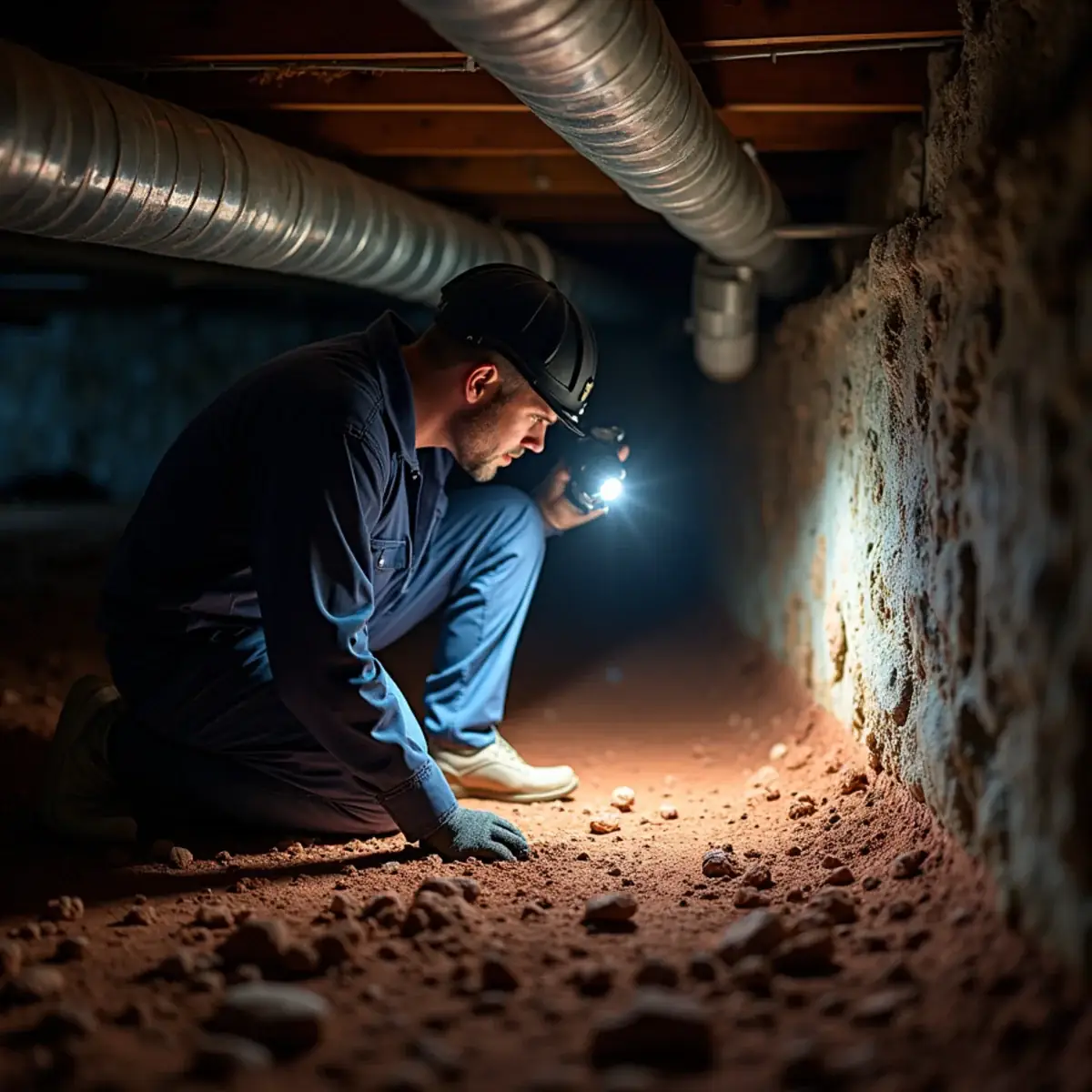
Flex duct needs support at regular intervals. When straps fail, it sags into a belly that restricts airflow and collects condensation. We regularly crawl under homes and find runs lying in the dirt or hanging loose from the joists. That's not a sealing job.
Some rooms never get comfortable
A back bedroom that's always five degrees warmer, or an upstairs that never cools, often points to an undersized or badly routed branch. Sealing won't add capacity to a duct that was too small from the start.
Ducts sweat or show mold
In our humid summers, cold supply ducts in a crawlspace will sweat if the insulation is torn or the vapor barrier is missing. Over time you get wet insulation, rust on metal ducts, and sometimes mold. If you see dark growth at the registers or smell mustiness when the system kicks on, get it looked at.
The system is loud or dusty
Whistling at the returns, booming when the blower starts, or dust that settles right after cleaning can all signal undersized returns, high static pressure, or torn ducts pulling in crawlspace or attic debris.
Energy bills climb without explanation
Leaks and disconnected runs force the system to run longer. If your bills keep climbing and the equipment checks out fine, the ducts are the next place to look.
What a Proper Duct Evaluation Includes
- A visual inspection of the crawlspace or attic runs, including supports, connections, and insulation.
- A static pressure test to see whether the blower is fighting restrictive ductwork.
- Temperature readings at registers to find weak or leaking branches.
- A check of return-air sizing, since many older homes have one small return for the whole house.
- A look at moisture conditions that could damage new ducts if left uncorrected.
If the ducts need replacing, we design the new layout around the home's actual load, not just by copying what was there. Proper ductwork installation uses the right sizes, sealed connections, solid support, and insulation suited to a Piedmont crawlspace.
What Goes Into a Duct Replacement
People picture a messy, weeks-long job. For most single-story homes with a crawlspace, a full duct replacement takes a few days, and you can usually stay in the house. Here's the typical sequence:
- Measure the home and run a load calculation so each room gets the airflow it needs.
- Remove the old ducts, boots, and damaged insulation from the crawlspace or attic.
- Install new trunk lines and branches, sized to the design, with proper hangers and gentle bends.
- Seal every joint with mastic or approved tape and insulate supply runs to prevent sweating.
- Add or enlarge returns where the old layout starved the blower.
- Test static pressure and register temperatures to confirm the system breathes the way it should.
The testing step matters. A new duct system should make the blower work less, not more, and the numbers should prove it before we pack up.
Older Homes Around Burlington Need Extra Attention
Many of the homes we serve for HVAC and duct work in Glen Raven are older mill-era houses with low crawlspaces, ducts added decades after construction, and repairs layered on repairs. Similar stories show up in older sections of town where we handle heating and cooling service in Graham. In those homes, patching often costs more over time than doing it right once.
If you're replacing your system anyway, that's the best time to address the ducts. A new unit on bad ductwork will never reach its rated efficiency, and fixing both together is usually cleaner and less disruptive. Ask about it when you get a quote for HVAC system replacement.
If musty odors or dust are the main complaint, our indoor air quality services, including dehumidification and filtration, may be part of the fix alongside duct repairs.
Ductwork repair and replacement: myths vs. facts
Myth: Duct cleaning will fix weak airflow and dust problems.
Fact: Cleaning removes debris from inside the ducts, but it doesn't reconnect a run lying in the crawlspace, reopen crushed flex or enlarge an undersized return. Much of the dust in older homes comes from return leaks pulling crawlspace or attic air into the system. Seal and repair first; cleaning afterward, if it's needed at all, actually stays clean.
Myth: Ordinary duct tape is fine for sealing duct joints.
Fact: Cloth-backed duct tape dries out and lets go in crawlspace humidity and attic heat, often within a few seasons. Duct joints should be sealed with mastic or with foil tape listed to UL 181, the standard for duct closures. Mastic brushed over mechanically fastened joints is the most durable combination, and it's what inspectors expect to see.
Myth: Sheet-metal ducts last forever and never need replacing.
Fact: Metal outlasts flex, but not in every crawlspace. Uninsulated or poorly wrapped metal sweats all summer, seams rust open, and floor boots corrode where they meet the register. Old metal trunks were also often sized for a furnace before air conditioning was added. Durable material doesn't help if the duct is rusted, leaking or simply too small.
Myth: Adding more supply registers improves airflow to the whole house.
Fact: New registers divide the same air among more openings unless the trunk and returns grow too. On a system already starved by one small return, extra supplies can drop pressure at the far rooms and make them worse. Better airflow starts with enough return air and correctly sized trunks, then registers placed where each room actually loses heat.
Duct problems under Glen Raven and Graham homes
Glen Raven, about 8 minutes up NC 87, is a textbook case of ducts outgrown by the equipment. The 1950s and 1960s brick ranches got central heat when they were built and air conditioning years later, on ductwork sized for a modest furnace and a single hallway return. Two details we check in nearly every one:
- A wooden return platform under the closet furnace that uses the joist bay as a duct and draws in crawlspace dust
- Filters going gray in a matter of weeks because one small grille carries the whole house's return air
The small frame mill houses nearby often suit a slim ducted mini-split in a closet or shallow crawl better than another long retrofit trunk.
In Graham's early-1900s neighborhoods, about 10 minutes away, the problem is clearance. Crawlspaces barely 18 inches high led installers to lay trunks on the dirt, where humidity rusts the seams. When we rebuild duct in those houses, moving supply registers toward exterior walls and adding a proper return usually changes comfort more than the new metal itself.
From the field: the numbers behind a duct recommendation
Before recommending new ducts, Jesse measures total external static pressure, basically how hard the blower is pushing against the duct system. Most residential blowers are designed around roughly half an inch of water column. Older Burlington-area homes with a single small return often read well above that, which means reduced airflow, a noisier system, and a coil that runs colder and wetter than it should.
Sealing a system like that fixes the leaks but leaves the restriction. That's the most common reason homeowners pay for sealing and see little change.
Fix the crawlspace before the ducts
New ducts installed over bare, damp dirt will sweat the first July. If the crawlspace has standing water, a missing or torn vapor barrier, or high humidity, we deal with that first, often with a crawlspace vapor barrier, so the new insulation stays dry.
Honest trade-offs in materials
- Sheet-metal trunk with flex branches: the common, cost-sensible layout. Flex works well when it's pulled tight, kept short and supported.
- More hard pipe: costs more in labor, but lasts longer and holds up better in low, tight crawlspaces where flex gets stepped on.
- Partial replacement: reasonable when the trunk is sound. It can backfire if a weak return stays in place.
Every new run gets sealed at the joints and insulated, and we re-measure static pressure before we leave so you can see the improvement in numbers.
Get an Honest Look Under Your House
We'll tell you plainly whether your ducts need sealing, partial replacement, or a full redesign, and we'll show you photos so you can see what we saw. When we finish, we clean up completely. Schedule a ductwork inspection with Littlejohn HVAC and find out what's really happening beneath your floors.
Frequently asked questions
How long does ductwork last?
Well-installed sheet metal ductwork can last for decades. Flex duct usually lasts less, often 15 to 25 years, and damp crawlspaces, pests, and poor support can shorten that considerably. Condition matters more than age alone, so an inspection is the best guide.
Can I replace just part of my ductwork?
Yes. If the trunk line is sound but several flex branches are crushed or torn, replacing those runs can be a sensible fix. We'll check the whole system so the new sections don't end up paired with an undersized return or a failing trunk.
Should I replace ductwork when I replace my HVAC system?
If the ducts are old, leaky, or poorly sized, it's usually the best time. A new system can't deliver its rated efficiency or comfort through bad ducts, and doing both at once is typically less disruptive than two separate projects.
Local service for this topic

Written by Littlejohn HVAC Solutions, LLC. Owner Jesse Littlejohn is a licensed HVAC professional serving Burlington and Alamance County. About us